
35 ChatGPT-5.5 Prompts for Startup Founders: Pitch Decks, Market Research, Competitive Analysis, and Fundraising Strategy

ChatGPT-5.5 Masterclass for Startup Founders — 35 Prompts to Build, Validate, and Scale
Published by chatgptaihub.com — a practical masterclass that gives founders immediate, copy-pasteable prompts for Pitch Decks, Market Research, Competitive Analysis, Fundraising, and Go-to-Market planning using ChatGPT-5.5.
How to use this masterclass
This guide is designed for busy founders who want high-impact ChatGPT-5.5 prompts that are context-aware and output structured results. Each prompt below contains:
- Purpose: What the prompt achieves.
- Context variables: Variables you should supply (placeholders to customize).
- Prompt text: A ready-to-copy prompt tailored for ChatGPT-5.5.
- Output format: Specifies how the assistant should structure its response (JSON, slide bullets, tables, etc.).
Tip: Use system messages for global constraints (tone, length) and put the provided prompt in the user role. Adjust temperature for creativity — 0.0-0.3 for factual outputs, 0.5-0.8 for creative brainstorming.
Prompt Index (Quick Links)
| Section | Prompts |
|---|---|
| Pitch Deck | 1–7 |
| Market Research | 8–14 |
| Competitive Analysis | 15–21 |
| Fundraising | 22–28 |
| Go-to-Market | 29–35 |
Pitch Deck Prompts (7)
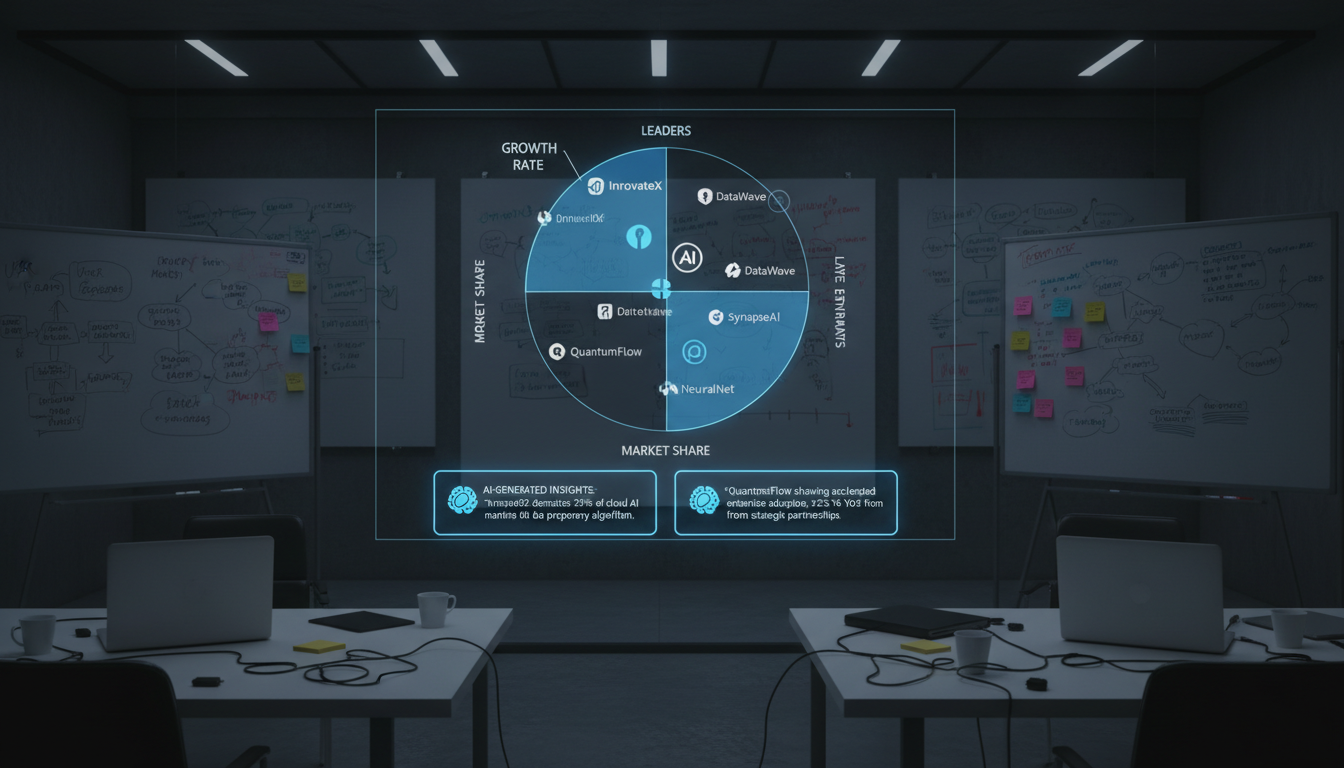
These prompts help you write and refine slides, narratives, and visual suggestions for investor-grade pitch decks.
Prompt 1 — One-Page Executive Summary Slide
Purpose: Generate a concise single-slide executive summary that fits on one page of a pitch deck for initial investor meetings.
- {startup_name} — the company name
- {tagline} — one-line value prop
- {industry} — industry or sector
- {problem_statement} — 1–2 sentences of the problem
- {solution_summary} — 1–2 sentences of the solution
- {traction_highlights} — list of top 3 traction metrics (e.g., MRR, users)
- {ask} — funding amount or partnership ask
- {audience_tone} — e.g., “professional”, “founder-friendly”, “investor-ready”
System: You are a concise investor presentation writer. Tone: {audience_tone}. Limit the slide to a single page/box designed for an investor pitch.

User: Create a one-page Executive Summary slide for {startup_name}. Include:
1) Title (Company name + tagline).
2) Problem (one clear sentence).
3) Solution (one clear sentence + one-line product description).
4) Market (one sentence with TAM/SAM if available).
5) Traction highlights (bullet list of {traction_highlights}, 1–3 bullets).
6) Business model (one sentence).
7) Ask (exact {ask} and intended use of funds summary in 1–2 bullets).
8) One-sentence closing impact statement.

Keep each section to 1–2 short bullet points. Provide a "Visual suggestions" line with 2 image/graphic ideas.

Return the slide as JSON with keys: title, problem, solution, market, traction, business_model, ask, closing_statement, visual_suggestions.
Output format:
JSON object with keys as specified and short string values or arrays where appropriate.
Prompt 2 — Problem & Solution Narrative (2 slides)
Purpose: Create a two-slide narrative: Problem slide and Solution slide with supporting evidence and customer quote examples.
- {target_customer} — persona (e.g., “SMB e-commerce managers”)
- {pain_points} — list of 3-5 pain points
- {differentiators} — list of 3 unique product differentiators
- {customer_quote} — optional real or mock quote to illustrate
- {evidence_points} — metrics or case study snippets (optional)
System: You are a persuasive storyteller for investor decks. Keep language punchy and evidence-backed.

User: Produce two slides for {startup_name}:
Slide A (Problem): Headline (one line), 3 bullet pain points tailored to {target_customer}, one concise statistic that emphasizes the scale or urgency of the problem, and one example user story (2–3 sentences).

Slide B (Solution): Headline (one line), 3 bullets describing exactly how the product solves each pain point (map items to pain points), include {differentiators} and 1 suggested customer quote (use {customer_quote} or generate a realistic exemplar). End with "Key benefit" one-liner.

Return as a structured array: [{slide_title, slide_headline, bullets:[...], statistic, user_story, differentiators, customer_quote, key_benefit}].
Output format:
JSON array with two objects. Each object includes slide_title, slide_headline, bullets (array), plus the other specified fields.
Prompt 3 — Market Size Slide with Methodology
Purpose: Build a defensible market size slide with TAM/SAM/SOM calculations and assumptions you can put into a slide footnote.
- {sector} — e.g., “B2B SaaS payments”
- {geography} — e.g., “Global”, “US only”
- {key_metrics} — revenue per customer, number of potential customers, average transaction size
- {revenue_model} — pricing, fees, etc.
- {assumptions} — any pre-specified assumptions or market reports to reference
System: You are a rigorous market analyst. Be explicit about calculation steps and assumptions.

User: Prepare a Market Size slide for {sector} in {geography}. Calculate TAM, SAM, SOM using the supplied {key_metrics} and {revenue_model}. For each of TAM/SAM/SOM include:
- numeric estimate (round to 2 significant figures),
- calculation formula with variables,
- confidence level (low/medium/high),
- main assumptions and sources.

Finish with 3 bullet recommendations for how to present this slide to investors (visuals and caveats). Output as JSON: {TAM:{value,formula,confidence,assumptions}, SAM:..., SOM:..., recommendations:[...]}.
Output format:
JSON with nested objects for TAM/SAM/SOM and an array of presentation recommendations.
Prompt 4 — Product Roadmap Slide (12–18 months)
Purpose: Produce a 12–18 month product roadmap for the deck, connecting releases to revenue or retention impact.
- {current_stage} — “MVP”, “Beta”, “Post-product-market-fit”
- {quarter_start} — starting quarter (e.g., “Q3 2026”)
- {themes} — 3–5 product themes (e.g., “scaling, automation, integrations”)
- {resource_constraints} — team size, dev capacity
- {key_metrics_to_move} — e.g., “activation rate, churn, ARPU”
System: You are a product strategist translating roadmap into investor-facing outcomes. Emphasize impact-to-metric mapping.

User: Create a 12–18 month roadmap for {startup_name} starting {quarter_start}. Use themes: {themes}. For each quarter:
- 3 planned initiatives (title + 1-line summary),
- expected impact on {key_metrics_to_move} (quantitative if possible),
- dependencies and risks,
- one KPI to measure success.

Return as a table (array of quarters) and include a 2-line executive summary at top. Format as JSON: {summary, roadmap:[{quarter,initiatives:[{title,summary,impact,dependencies,risks,kpi}],...]}.
Output format:
JSON with a summary string and an array of roadmap quarter objects.
Prompt 5 — Business Model & Unit Economics Slide
Purpose: Create a slide that clearly explains the business model and demonstrates unit economics to show profitability at scale.
- {pricing_tiers} — list with price points and features
- {customer_acquisition_cost} — CAC estimate or range
- {lifetime_value} — LTV or assumptions to calculate
- {gross_margin} — current or target gross margin
- {payback_period} — months
System: You are a financial storyteller for decks. Explain numbers simply and visually.

User: Build a Business Model & Unit Economics slide for {startup_name}. Include:
1) Business model description (1 paragraph).
2) Pricing summary table with {pricing_tiers}.
3) Unit economics calculation using {customer_acquisition_cost}, {lifetime_value}, {gross_margin}, {payback_period} — show formulas and result.
4) Sensitivity analysis (2 scenarios: base and downside).
5) One conclusion line for investors.

Output as JSON: {business_model, pricing_table:[{tier,price,features}], unit_economics:{cac,ltv,gross_margin,payback,formulas}, sensitivity:[...], conclusion}.
Output format:
JSON including a pricing_table array and unit_economics object with explicit formulas.
Prompt 6 — Team Slide with Role Fit & Hiring Plan
Purpose: Craft a team slide that highlights founders’ strengths, role fit, and a prioritized hiring plan for the next 12 months.
- {founders} — list with name, title, 2-line bio each
- {current_team_size} — number
- {key_hiring_needs} — prioritized roles (3–6)
- {org_gaps} — specific gaps in expertise
System: You are a talent and org design advisor for startups.

User: Prepare a Team slide for {startup_name}. Provide:
- Short founder bios (2 lines each) focusing on relevant achievements.
- Current org snapshot (team size and functions).
- Prioritized 12-month hiring plan with rationale for each role, impact on product/metrics, and expected time to hire.
- One "Why this team can win" paragraph.

Return as structured JSON: {founders:[{name,title,bio}], org_snapshot, hiring_plan:[{role,rationale,impact,time_to_hire}], superpower}.
Output format:
JSON with arrays for founders and hiring_plan and short strings for snapshot and superpower.
Prompt 7 — Investor FAQ Appendix (Top 10 Questions)
Purpose: Create a concise FAQ appendix addressing top investor questions and rebuttals for the most obvious risks.
- {most_obvious_risks} — list of 3 major risks
- {traction_evidence} — short bullets supporting traction
- {legal_or_regulatory_issues} — if any
System: You are an investor relations expert. Keep answers concise and defensible.

User: Generate a Top 10 Investor FAQ for {startup_name}. Include for each question:
- question (one line),
- concise answer (2–4 sentences),
- supporting evidence or reference if applicable (one bullet).

Be sure to include answers for {most_obvious_risks}, defensible one-liners on traction using {traction_evidence}, and a short note about {legal_or_regulatory_issues} if relevant.

Return as a JSON array of objects: [{question, answer, evidence}].
Output format:
JSON array of 10 objects.
Market Research Prompts (7)
These prompts help you validate demand, size segments, build personas, and extract actionable insights from data and secondary research.
Prompt 8 — Target Customer Persona Deep Dive
Purpose: Create a detailed persona including jobs-to-be-done, pains, gains, buying behavior, and content channels.
- {persona_name} — label (e.g., “E-commerce Ops Manager”)
- {demographics} — age, company size, location
- {role_responsibilities} — top responsibilities
- {common_tools} — tools they use
- {purchase_triggers} — what would drive them to buy
System: You are a market researcher who synthesizes qualitative and quantitative cues into a usable persona.

User: Build a Target Customer Persona for {persona_name}. Include:
- One-line summary,
- Demographics and firmographics ({demographics}),
- Day-in-the-life (4–6 bullet points),
- Top 5 pains and top 5 gains,
- Buying process and decision criteria,
- Preferred content channels and message framing,
- 3 quick marketing hooks that would prompt a demo request.

Return as JSON with keys: summary, demographics, day_in_life, pains, gains, buying_process, channels, hooks.
Output format:
JSON with arrays and strings for each section.
Prompt 9 — Survey Design to Validate Demand
Purpose: Produce a 10-question user survey optimized for conversion and clear actionable analytics.
- {objective} — what you want to learn (e.g., price sensitivity, feature interest)
- {target_population} — sample description
- {survey_platform} — Typeform, Google Forms, etc.
System: You are an expert survey designer. Keep questions short, avoid bias, and include best practices for distribution.

User: Create a 10-question survey to validate {objective} with {target_population}. For each question provide:
- question text,
- type (multiple choice, Likert, open text),
- recommended options (if applicable),
- rationale for why it helps answer the objective,
- estimated time to complete.

Also include a suggested intro copy (30–40 words) and a closing CTA. Output as a JSON array of question objects and two strings: intro_copy and closing_cta.
Output format:
JSON: {intro_copy, questions:[{q,type,options,rationale,eta}], closing_cta}
Prompt 10 — Pricing Sensitivity Test Setup
Purpose: Design an A/B pricing sensitivity experiment and sample size calculation to estimate willingness to pay.
- {current_price_options} — array of candidate prices
- {conversion_baseline} — current conversion rate
- {alpha} — significance level, e.g., 0.05
- {power} — desired power, e.g., 0.8
System: You are a growth analyst who lays out experiments and sample size math clearly.

User: Create an A/B pricing test plan for {startup_name} using {current_price_options}. Include:
- experiment design (groups, randomization, targeting),
- sample size calculation per variant using {conversion_baseline}, {alpha}, and {power} with formulas,
- expected timeline and traffic allocation,
- success criteria and statistical test to use,
- one paragraph on common pitfalls and how to interpret results.

Return as JSON: {design, sample_size_table:[{price_variant,sample_size,assumptions}], timeline, success_criteria, pitfalls}.
Output format:
JSON with a sample_size_table array and other descriptive fields.
Prompt 11 — Voice of Customer Themes from Interview Notes
Purpose: Summarize 10–20 raw interview notes into themes, urgency, and suggested product actions.
- {interview_notes} — paste up to 20 timestamped notes or short quotes
- {priority_metric} — metric you want to move (e.g., retention)
System: You are an applied UX researcher. Extract themes and map to product actions.

User: Analyze the following interview notes: {interview_notes}. Provide:
1) Top 6 themes with supporting quotes (1–2 quotes per theme).
2) Urgency score (1–5) per theme relative to {priority_metric}.
3) Suggested product or go-to-market actions (1–2 bullets per theme).
4) One short recommended next research step.

Return as JSON: {themes:[{name,quotes,urgency,actions}], next_step}.
Output format:
JSON array of themes and next_step string.
Prompt 12 — Secondary Research Summary (5 Reports)
Purpose: Digest up to 5 uploaded/linked market reports into one-page insights for investor decks.
- {report_summaries} — paste short summaries or URLs (up to 5)
- {focus_questions} — what you want to extract (size, growth, trends)
System: You are a market intelligence analyst. Synthesize and cite reports succinctly.

User: Given {report_summaries}, synthesize the key findings that answer: {focus_questions}. For each report provide:
- 1–2 key takeaways,
- data points to quote (with suggested footnote text),
- how it affects our go-to-market or product decisions.

Produce a one-page executive synthesis (3–5 bullets) and a table cross-referencing findings to strategic implications. Output as JSON with keys: synthesis, report_table:[{report, takeaway,data_points,implication}].
Output format:
JSON with a synthesis string and a report_table array.
Prompt 13 — Channel Opportunity Assessment
Purpose: Evaluate 6 potential acquisition channels and recommend the top 2 with expected KPIs and tests.
- {channels} — list of channels to evaluate (e.g., SEO, paid search, partnerships, events)
- {budget} — monthly acquisition budget
- {current_cac} — current CAC or range
System: You are a performance marketer who ranks channels by cost-effectiveness and testability.

User: Evaluate the following channels: {channels}. For each channel provide:
- expected CAC range,
- time-to-scale estimate,
- suggested 30/60/90-day test plan with KPIs,
- one-sentence strategic fit comment.

Recommend the top 2 channels with rationale and initial tests. Return as JSON: {channels:[{name,cac_range,time_to_scale,test_plan,kpi,fit}], recommendations:[{channel,rationale,initial_test}]}.
Output format:
JSON with channel details and recommendations array.
Prompt 14 — Trend Radar: 6 Trends That Affect Your Startup
Purpose: Identify 6 macro or micro trends that influence product strategy and investor narrative.
- {industry_context} — short industry context
- {time_horizon} — e.g., 2 years, 5 years
System: You are a strategic foresight analyst. Prioritize trends by impact and likelihood.

User: For {industry_context} over the next {time_horizon}, produce a Trend Radar with 6 trends. For each trend include:
- short description,
- why it matters (1–2 sentences),
- impact level (low/medium/high),
- suggested strategic response (1 line).

Return as JSON: {trends:[{name,description,why,impact,response}] }.
Output format:
JSON trends array with impact and response fields.
Competitive Analysis Prompts (7)
Use these prompts to map your competitive landscape, positioning, feature gaps, pricing comparisons, and attack/defend strategies.
Prompt 15 — Competitive Landscape Map
Purpose: Generate a quadrant or matrix-style positioning map with 8–12 competitors and criteria suggestions for plotting.
- {competitors} — list of competitor names with short descriptions
- {axes} — suggested axes (e.g., “feature breadth” vs “price”) or ask the model to propose them
- {unique_value} — your startup’s key differentiator
System: You are a competitive strategy consultant and will propose a useful 2-axis map.

User: Create a Competitive Landscape Map for {startup_name} vs {competitors}. Use axes: {axes} (or suggest better axes). For each competitor provide a 1-line position justification and a suggested quadrant coordinate (1–10 scale for each axis). Recommend one visual layout (quadrant, bubble chart, or table) and provide a legend. Return as JSON: {axes,competitors:[{name,position_justification,x,y}],visual_recommendation,legend}.
Output format:
JSON with axes and competitor coordinate list.
Prompt 16 — Feature Comparison Matrix
Purpose: Produce a feature-by-feature comparison with 6–8 competitors and highlight must-win features and quick wins.
- {features} — list of 8–12 key features you want compared
- {competitors} — list of competitor names
- {your_product_features} — features your product currently has
System: You are a product manager who creates clear feature matrices.

User: Create a Feature Comparison Matrix comparing {features} across {competitors} and {startup_name}. For each cell mark: Full, Partial, or None and provide a one-sentence note if Partial. Highlight:
- 3 must-win features we should prioritize,
- 3 quick wins that can be shipped in <8 weeks.

Return as JSON: {features:[...], matrix:[{feature,comparisons:[{company,status,note}]}], must_win, quick_wins}.
Output format:
JSON with matrix array and lists of must_win and quick_wins.
Prompt 17 — Pricing & Packaging Competitive Analysis
Purpose: Analyze competitor pricing tiers and recommend a defensible pricing strategy and packaging options.
- {competitor_pricing} — array of competitor tier names and prices
- {value_metrics} — metrics you will charge on (e.g., seats, usage)
- {target_segment} — which segment you're targeting first
System: You are a pricing strategist. Provide a competitive-aware, testable pricing approach.

User: Given {competitor_pricing}, analyze headings:
1) Pricing comparison table (tiers, price, included limits).
2) Positioning recommendation (undercut, value premium, parity).
3) 3 packaging options to test for {target_segment} with one-line rationale each.
4) Suggested introductory promotional offer and expected conversion uplift.

Return as JSON: {comparison_table:[...], positioning, packaging_options:[{name,rationale}], promo_recommendation}.
Output format:
JSON with comparison_table and packaging_options arrays.
Prompt 18 — SWOT Analysis by Competitor
Purpose: Create SWOT (Strengths, Weaknesses, Opportunities, Threats) snapshots for 4–6 competitors and one for your startup.
- {competitors_brief} — brief 1–2 line descriptor per competitor
- {your_strengths} — your top strengths
System: You are a strategic analyst providing concise SWOTs.

User: For each item in {competitors_brief} and {startup_name}, produce a SWOT with 2 bullets per quadrant (strengths, weaknesses, opportunities, threats). Then provide a 3-bullet synthesis comparing all SWOTs and recommend one strategic priority for defense and one for offense.

Output as JSON: {profiles:[{name,swot:{strengths:[],weaknesses:[],opportunities:[],threats:[]}}], synthesis, recommendations}.
Output format:
JSON with an array of profile objects and high-level synthesis.
Prompt 19 — Differentiation Messaging (Battle Card)
Purpose: Build a one-page battle card for sales that highlights how to talk about the product vs a named competitor.
- {competitor_name} — competitor to compare against
- {win_conditions} — typical sales objections you beat or lose
- {evidence} — case studies, metrics, or testimonials
System: You are a sales enablement copywriter.

User: Draft a Battle Card for {competitor_name} vs {startup_name}. Include:
- 3 opening value statements (30–40 char),
- head-to-head comparison table (3–5 rows),
- common objections and suggested rebuttals (3),
- proof points from {evidence},
- recommended closing ask.

Return as JSON: {value_statements, comparison_table, objections_and_rebuttals, proof_points, closing}.
Output format:
JSON with sections for quick use by sales reps.
Prompt 20 — Competitive Monitoring Playbook
Purpose: Create a tactical playbook on how to monitor competitors weekly and what triggers should prompt a strategic review.
- {competitors_list} — names to monitor
- {monitor_tools} — e.g., Google Alerts, Crunchbase, SimilarWeb
- {review_frequency} — e.g., weekly, monthly
System: You are a strategic operations specialist.

User: Produce a Competitive Monitoring Playbook for {competitors_list} using tools {monitor_tools}. Include:
- dashboard fields to track weekly,
- trigger events (pricing change, funding, product launch, layoffs) and what action to take for each,
- roles & responsibilities (who on our team does what),
- one-page monthly review template with key metrics.

Return as JSON: {dashboard_fields, triggers:[{event,action}], roles, monthly_template}.
Output format:
JSON with triggers array and dashboard_fields array.
Prompt 21 — M&A / Partnership Target Screener
Purpose: Generate a prioritized list of 6 strategic partners or acquisition targets with rationale and integration fit.
- {strategic_objective} — e.g., "expand distribution", "acquire talent", "add feature X"
- {constraints} — budget, geography, cultural fit
System: You are a corporate development advisor.

User: Produce a prioritized screen of 6 potential partners or acquisition targets to achieve {strategic_objective}, subject to {constraints}. For each target include:
- one-line rationale,
- strategic fit score (1–10) across revenue, product, tech, culture,
- suggested approach (partnership, white-label, acquisition),
- a 2-step outreach template (first email + follow-up).

Return as JSON: {targets:[{name,rationale,fit_score,approach,outreach:[first,followup]}]}.
Output format:
JSON array of targets with outreach templates.
Fundraising Prompts (7)
These prompts help you sharpen your fundraising materials, investor outreach strategy, thesis targeting, and negotiation preparedness.
Prompt 22 — Investor Target List by Fit
Purpose: Build a prioritized list of 12 investors (angels, seed VCs, strategic) tailored to your stage and thesis.
- {stage} — pre-seed, seed, Series A
- {check_size} — target check sizes
- {investment_thesis} — one-sentence thesis for why investors should care
- {geographic_focus} — optional
System: You are a fundraising strategist who recommends investors by fit and help craft an outreach plan.

User: Produce a prioritized list of 12 investors for a {stage} round with typical checks around {check_size}. For each investor include:
- name and firm,
- typical check size and stage focus,
- reason for fit with our {investment_thesis},
- contact/intro strategy (warm intro, cold email, follow-up cadence),
- likely questions to be asked.

Return as JSON: {investors:[{name,firm,check_size,fit,contact_strategy,likely_questions}]}.
Output format:
JSON investor array with contact_strategy and likely_questions fields.
Prompt 23 — Warm Intro Email Templates (Founder + CTO)
Purpose: Generate three warm intro email templates: short cold outreach, investor update with traction, and a follow-up reminder.
- {founder_name}
- {startup_name}
- {traction_highlight}
- {ask} — e.g., "seed round, $2M"
System: You are a succinct fundraising copywriter. Keep templates skimmable, personalizable, and <80–120 words.

User: Produce three email templates for outreach:
1) Short intro (cold reach) from {founder_name} introducing {startup_name},
2) Investor update highlighting {traction_highlight} and a soft ask,
3) Polite follow-up reminding about previous message.

For each template include: Subject line, Email body, one-line personalization token suggestions. Return as JSON: {templates:[{type,subject,body,personalization_tokens}]}.
Output format:
JSON array of template objects.
Prompt 24 — Data Room Checklist for Seed/Series A
Purpose: Create a prioritized data room checklist grouped by must-have, nice-to-have, and optional items.
- {stage} — seed or Series A
- {specific_documents} — any special docs you already have
System: You are an experienced startup operator preparing founders for diligence.

User: Draft a Data Room Checklist for a {stage} round. Group items into: Must-have (pre-diligence), Nice-to-have (expected in diligence), Optional (helpful for deeper diligence). Include 20–30 specific document names (financials, cap table, contracts, IP, technical docs). For each item add a 1-line explanation of why investors want it.

Return JSON: {must_have:[{item,why}], nice_to_have:[...], optional:[...]}.
Output format:
JSON with arrays for each group and short explanations.
Prompt 25 — Negotiation Cheat Sheet (Term Sheet Highlights)
Purpose: Summarize key term sheet points with suggested founder responses and redlines for common clauses.
- {desired_terms} — desired preferences like valuation, board seats, liquidation preferences
- {nonnegotiables} — items you won't accept
System: You are a startup lawyer-friendly negotiator (non-legal advice: for educational purposes only).

User: Create a Negotiation Cheat Sheet that covers:
- key clauses (valuation, option pool, liquidation preference, anti-dilution, board seats, pro-rata, vesting),
- typical investor asks and suggested founder responses,
- redline suggestions (short bullets) for 6 common clauses,
- a 3-step negotiation plan with fallback positions based on {desired_terms} and {nonnegotiables}.

Return as JSON: {clauses:[{clause,investor_ask,founder_response,redline}], negotiation_plan:[...]}.
Output format:
JSON with clause objects and a negotiation_plan array.
Prompt 26 — Investor Update Template & Cadence
Purpose: Produce a repeatable monthly investor update template and recommended cadence with content prioritization.
- {monthly_metrics} — metrics you want to include
- {audience_segments} — e.g., lead investor, others, advisors
System: You are an investor communications advisor.

User: Create a Monthly Investor Update template that includes {monthly_metrics}. For each section, indicate ideal length and priority. Provide:
- sample subject line variations,
- suggested cadence and segmentation by {audience_segments},
- a 40–60 word template for the body.

Return as JSON: {template_sections:[{name,content_guidelines,length}], subject_lines:[...], cadence, body_templates:[{segment,template}]}.
Output format:
JSON with sections and templates suitable for copy/paste.
Prompt 27 — Preparing for Investor Q&A (Mock Session)
Purpose: Generate a 30-question mock Q&A tailored to your deck and suggested concise answers to rehearse with the team.
- {deck_summary} — paste a short deck outline or main slides
- {known_weaknesses} — things investors might attack
System: You are a seasoned investor interviewer. Provide pointed, realistic questions.

User: Based on {deck_summary} and {known_weaknesses}, produce 30 likely investor questions grouped by theme (market, product, team, financials, go-to-market, exit). For each question include a suggested concise answer (2–4 sentences) and a one-line coach tip on delivery.

Return as JSON: {qa:[{theme,question,answer,coach_tip}]}.
Output format:
JSON array grouped by theme with question, answer, and coach tip fields.
Access 40,000+ AI Prompts for ChatGPT, Claude & Codex — Free!
Subscribe to get instant access to our complete Notion Prompt Library — the largest curated collection of prompts for ChatGPT, Claude, OpenAI Codex, and other leading AI models. Optimized for real-world workflows across coding, research, content creation, and business.
Go-to-Market Prompts (7)
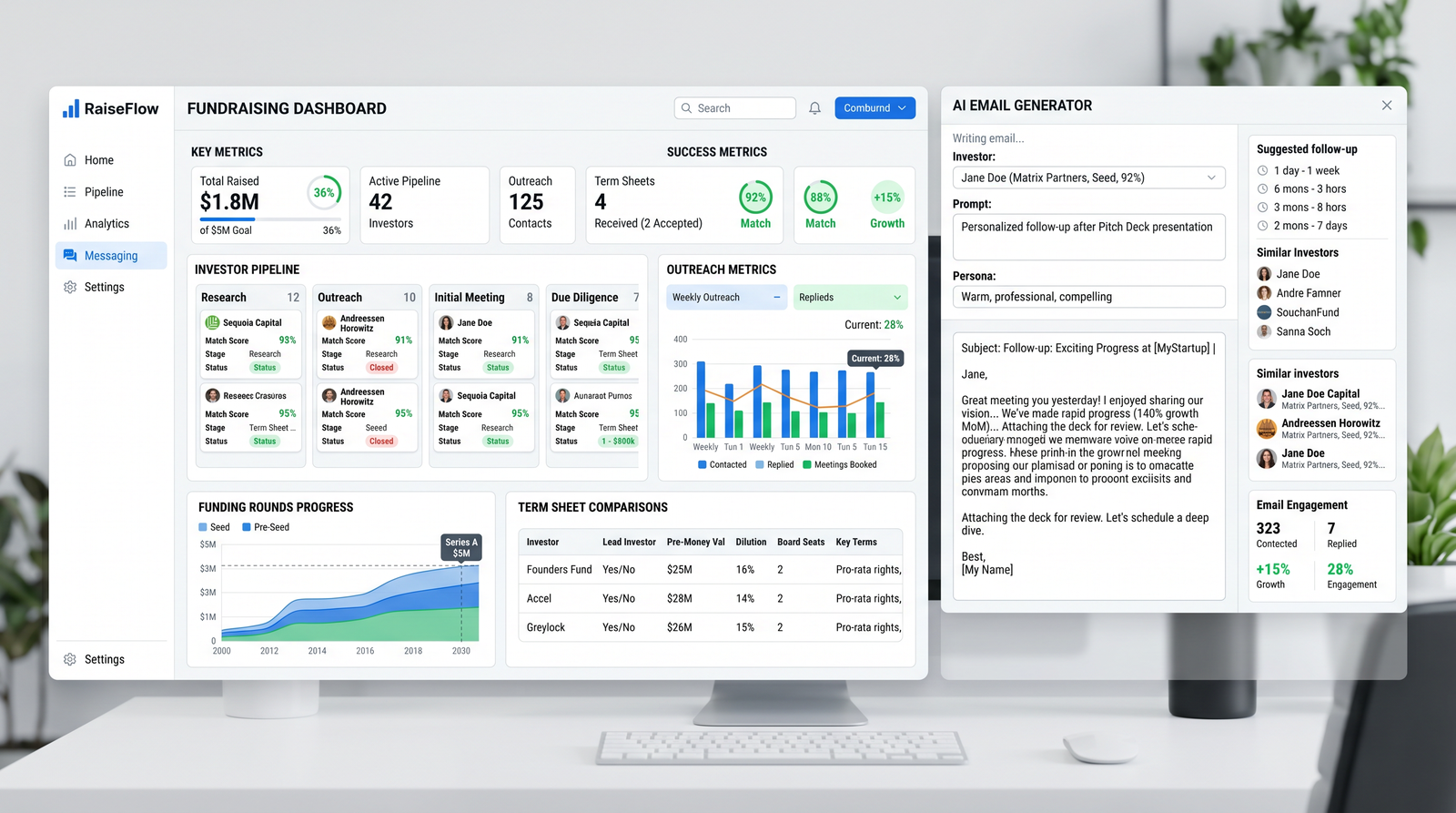
These prompts produce tactical, testable GTM plans: first customers, channel tests, sales scripts, partnerships, and scaling playbooks.
Prompt 28 — First 100 Customers Plan
Purpose: Build a tactical plan to acquire the first 100 customers with channel mix, outreach scripts, and success metrics.
- {ideal_customer_profile} — ICP summary
- {avg_deal_size} — estimated ARR or revenue per customer
- {team_capacity} — number of salespeople/outbound reps
System: You are an early growth strategist focused on high-precision first-user acquisition.

User: Create a 100-customer acquisition plan for {startup_name} targeting {ideal_customer_profile} with average deal size {avg_deal_size}. Include:
- top 4 channels and expected contribution to the 100 customers,
- sample outbound sequence (4 messages) for SDRs,
- content/offer ideas (lead magnets, webinars),
- success metrics and conversion assumptions,
- timeline and role assignments based on {team_capacity}.

Return as JSON: {channels:[{channel,expected_customers,assumptions}], outbound_sequence:[{step,message}], content_offers:[...], metrics, timeline_roles}.
Output format:
JSON with channels, outbound_sequence, and metrics objects.
Prompt 29 — Sales Playbook for a 2-Person SDR Team
Purpose: Provide a compact sales playbook tailored for two SDRs covering qualification script, objection handling, demo handoff, and KPIs.
- {sales_cycle_length} — avg days to close
- {ideal_deal_size} — ticket size
- {common_objections} — list of 3–5
System: You are a pragmatic head of sales for early-stage startups.

User: Create a Sales Playbook for a 2-person SDR team with {sales_cycle_length} average and {ideal_deal_size} average deal size. Provide:
- ideal daily/weekly activity plan,
- qualification script (BANT or MEDDIC-style short version),
- standard objection handling for {common_objections} with 1–2 lines rebuttal,
- demo handoff checklist and success criteria,
- KPIs dashboard (weekly and monthly).

Return as JSON: {activities,qualification_script,objections,handoff_checklist,kpis}.
Output format:
JSON with arrays for activities and objections and a checklist object.
Prompt 30 — Channel Launch Playbook (Paid Ads)
Purpose: A focused paid ad launch playbook (search/social) with creatives, targeting, budgets, and KPIs for the first 90 days.
- {platforms} — list e.g., "Google, Meta, LinkedIn"
- {monthly_budget} — allocation
- {target_conversion} — target conversion rate to trial or demo
System: You are a paid growth expert building actionable test plans.

User: For platforms {platforms} and budget {monthly_budget}, build a 90-day paid ads playbook including:
- weekly budget allocation per platform,
- 3 headline/ad copy variants and 3 creative concepts,
- targeting specs (audiences, excludes),
- landing page headline + primary CTA and tracking plan,
- KPIs and break/fix rules for scaling or pausing campaigns.

Return as JSON: {budget_allocation,ad_variants:[{headline,copy,creative_concept}],targeting,landing_page,tracking_kpis}.
Output format:
JSON with ad_variants array and tracking_kpis object.
Prompt 31 — Partnerships & Channel Sales Playbook
Purpose: Create a repeatable partner program draft including tiers, incentives, co-selling playbook, and KPIs.
- {partner_types} — e.g., referral, reseller, integration partners
- {commission_structures} — desired ranges or models
- {support_commitments} — marketing co-funds, training
System: You are a partnerships lead who operationalizes partner programs quickly.

User: Draft a Partner Program for {startup_name} for partner types {partner_types}. For each partner type include:
- program tier and incentive (commissions, discounts),
- onboarding and enablement checklist,
- co-sell process and lead distribution rules,
- KPIs and monthly reporting template.

Return as JSON: {partner_program:[{type,tier,incentive,onboarding,co_sell,kpis}], reporting_template}.
Output format:
JSON with partner_program array and reporting_template object.
Prompt 32 — PR & Thought Leadership Calendar (6 months)
Purpose: Generate a 6-month PR and content calendar for building credibility and generating inbound leads.
- {key_milestones} — product launches, funding announcements
- {topics} — 6–8 core thought leadership topics
System: You are a comms strategist producing an actionable editorial calendar.

User: Produce a 6-month PR and thought leadership calendar for {startup_name} keyed to {key_milestones} and focused on topics {topics}. For each month include:
- 3 content pieces (by type: op-ed, case study, blog),
- one PR angle and target publication list (3 outlets),
- KPI (mentions, backlinks, inbound leads),
- one influencer or partner to outreach that month.

Return as JSON: {calendar:[{month,content,pr_angle,target_outlets,kpi,partner}]}.
Output format:
JSON calendar array with monthly items.
Prompt 33 — Churn Reduction Action Plan
Purpose: Diagnose churn drivers and produce a prioritized plan with experiments to reduce churn by X% in 90 days.
- {current_churn_rate}
- {goal_reduction} — percent reduction target
- {data_sources} — analytics tools or cohort data availability
System: You are a retention expert. Prioritize high-impact, quick experiments.

User: For {startup_name} with current churn {current_churn_rate}, design a 90-day churn reduction plan to achieve {goal_reduction}. Include:
- top 5 likely churn drivers and evidence needed,
- 6 prioritized experiments (A/B tests or product changes) with expected impact and effort estimate,
- cohort-based measurement plan and signal thresholds,
- escalation plan if experiments fail.

Return as JSON: {drivers:[{driver,evidence_needed}], experiments:[{name,description,expected_impact,effort}], measurement_plan, escalation}.
Output format:
JSON experiments array and measurement_plan object.
Prompt 34 — International Expansion Prioritization
Purpose: Prioritize 4 international markets for expansion based on criteria and implementation checklist for the top market.
- {candidate_markets} — list of potential countries
- {expansion_constraints} — legal, payments, localization limitations
- {top_metrics} — metrics that matter for country choice (LTV, CAC)
System: You are an international GTM strategist.

User: Evaluate {candidate_markets} and score them on criteria: market size, ease of doing business, localization cost, competitor presence, and channel fit. Return a ranked list of top 4 markets with scores and recommend a rollout plan for the #1 market including regulatory checklist, localization priorities, go-to-market channels, partner types, and 90-day milestones.

Return as JSON: {ranked_markets:[{market,score,notes}], rollout_top_market:{checklist,channels,partners,milestones}}.
Output format:
JSON with ranked_markets array and rollout_top_market object.
Prompt 35 — Growth Dashboard Spec for BI
Purpose: Translate your growth priorities into a concrete BI dashboard spec with data sources, metrics, and visualizations for engineers and analysts.
- {primary_goals} — e.g., "grow MRR", "improve conversion"
- {data_sources} — analytics, CRM, billing systems
- {reporting_frequency} — hourly, daily, weekly
System: You are a BI product manager building specs for an analytics engineer.

User: Prepare a Growth Dashboard Spec aligned to {primary_goals}. Include:
- list of metrics (definitions and formulas),
- data sources for each metric and refresh frequency,
- suggested visualizations (charts/tables) and dashboard layout,
- alerts and thresholds with notification channels,
- data quality checks to implement.

Return as JSON: {metrics:[{name,definition,formula,source,refresh}], visuals:[{metric,chart_type,layout_position}], alerts:[{metric,threshold,notify_to}], dq_checks}.
Output format:
JSON metrics array and visuals array that engineers can implement.
Practical Tips for Using These Prompts
- Always provide precise context variables. The more specific your inputs, the more actionable the outputs.
- Use the Output format instructions to ask ChatGPT-5.5 to return JSON or tables that can be programmatically parsed into your tools.
- Chain prompts: use earlier outputs (e.g., personas, market numbers) as inputs to downstream prompts (e.g., GTM plans).
- Leverage system messages to set style, length, and role constraints (e.g., "Act as an investor-ready pitch writer").
- When in doubt, ask the assistant to produce a 2-sentence executive summary first to validate alignment, then ask for detailed deliverables.
To deepen your understanding of adjacent AI capabilities, explore our detailed analysis in OpenAI's Jalapeno Chip, which examines OpenAI's custom AI silicon and its impact on API pricing. The frameworks and prompt patterns discussed there integrate seamlessly with the strategies outlined in this article.
,
Organizations implementing these workflows will also benefit from understanding Why OpenAI Is Merging Codex and ChatGPT, which covers OpenAI merging Codex and ChatGPT into unified platform in detail. The methodologies presented there provide a natural extension of the concepts explored above, particularly for teams scaling their AI-assisted processes.
, and
To deepen your understanding of adjacent AI capabilities, explore our detailed analysis in Codex Record and Replay, which examines OpenAI's screen recording feature for workflow automation. The frameworks and prompt patterns discussed there integrate seamlessly with the strategies outlined in this article.
for templates, examples, and spreadsheets to use with these prompts.
Implementation Examples & Prompt Templates
Below is a re-usable prompt template you can adapt for any of the above use cases. Replace variables in curly braces with your startup's specifics.
System: You are an expert in {role_for_prompt} with experience in startups and investors. Tone: {tone}. Output must be in JSON and no longer than {max_tokens} tokens.

User: {task_description}. Context: {context_variables}. Please return JSON with keys: {desired_keys} and include visuals suggestions where appropriate.
Example: Use this template when you want to standardize prompts across your team or integrate them into a workflow tool that calls ChatGPT-5.5 programmatically.
Appendix: Prompt Engineering Checklist for Founders
| Checklist Item | Why it matters | Quick Action |
|---|---|---|
| Define goal clearly | Ensures outputs match the intended deliverable | Start the user prompt with "Goal: ..." |
| Supply concrete context variables | Reduces ambiguous answers and saves time | Provide example values for all placeholders |
| Require structured output | Enables automation and rapid consumption by your team | Ask explicitly for JSON/table output |
| Set constraints | Keeps outputs concise and slide-ready | Define length, tone, and audience |
| Ask for visuals | Helps designers build slides faster | Include "visual suggestions" as an output key |
| Iterate | Refinement improves quality | Use "Revise" prompts to shorten, expand, or format results |