
Enterprise AI Automation Case Studies 2026: How Companies Are Using AI Agents to Transform Operations
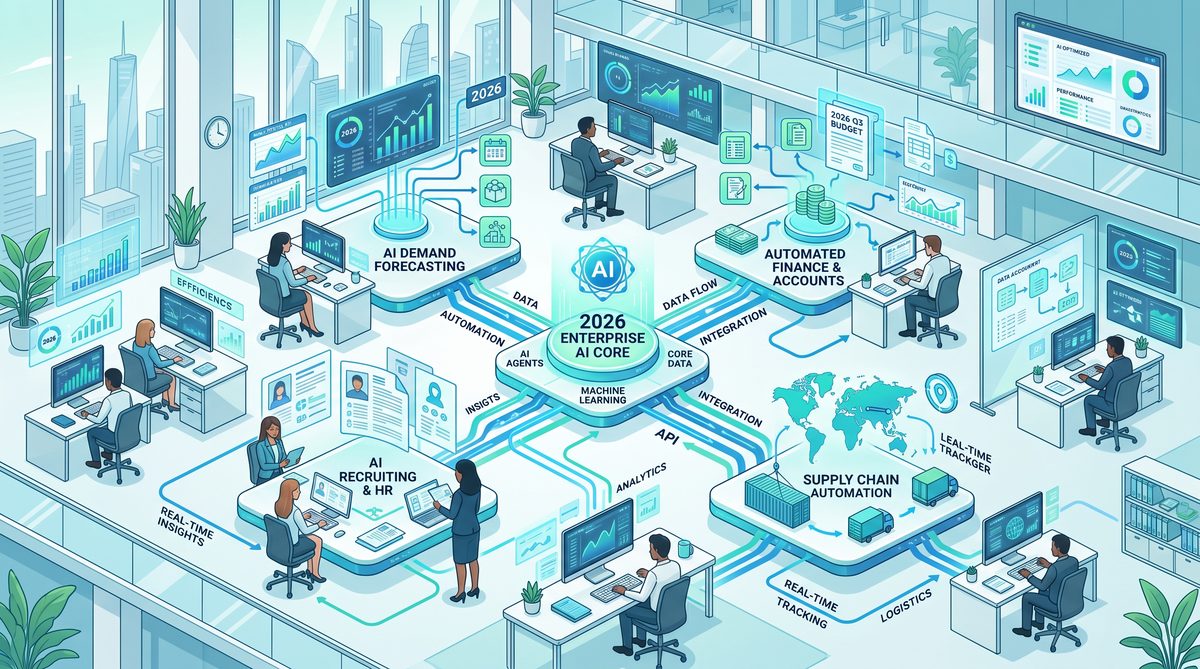
Enterprise AI Automation in 2026: Transforming Industries with Intelligent Agents
As we progress through 2026, enterprise AI automation has firmly established itself as a cornerstone of digital transformation across multiple industries. Organizations ranging from innovative Y-Combinator startups to established global corporations like SAP and platforms such as Reddit, alongside professional service firms such as law offices, are leveraging advanced AI agents powered by models from OpenAI, Anthropic’s Claude, and others to revolutionize workflows, enhance decision-making, and elevate customer experiences.
This case study explores the landscape of enterprise AI automation in 2026, spotlighting real-world applications and strategic implementations in sectors including customer service, finance, healthcare, and supply chain management. It presents an in-depth analysis of how AI agents are integrated into existing enterprise ecosystems, the measurable outcomes achieved, and forward-looking trends shaping the future of AI-driven business operations.
In addition to these sectors, AI agents are increasingly influencing areas such as human resources, legal services, marketing automation, and product development. Their ability to interpret complex data, automate routine tasks, and provide actionable insights is reshaping organizational structures and workforce dynamics. Enterprises are also experimenting with hybrid AI-human collaboration models, deploying agents as co-pilots that augment human expertise rather than replace it.
Technological advancements underpinning this transformation include breakthroughs in natural language understanding, reinforcement learning, and multi-modal AI architectures that combine text, image, audio, and structured data processing. The widespread adoption of cloud-native AI platforms and federated learning approaches ensures scalability and data privacy compliance, critical for enterprise-grade deployments.
Organizations are also investing in robust AI governance frameworks addressing ethical considerations, bias mitigation, transparency, and accountability. These frameworks are essential to foster trust among stakeholders and meet evolving regulatory requirements globally. The interplay between AI innovation and governance is a defining characteristic of the enterprise AI automation landscape in 2026.
AI Agents in Customer Service: Enhancing Engagement and Operational Efficiency
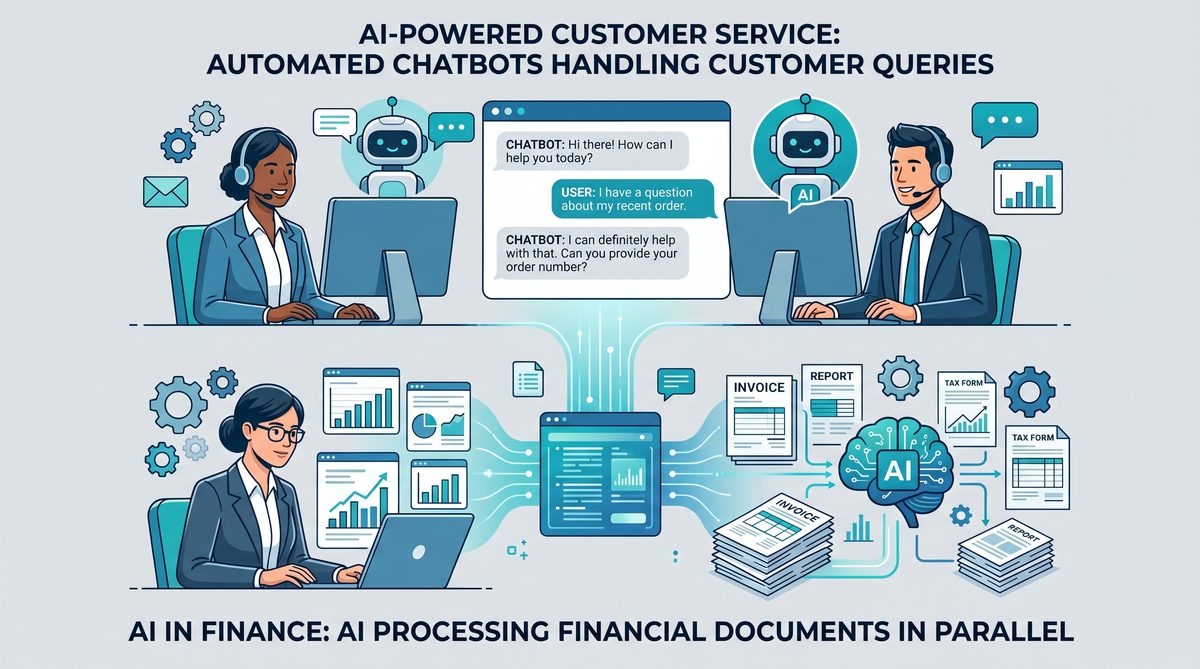
Customer service remains a critical touchpoint where enterprises seek to differentiate themselves through rapid, accurate, and personalized interactions. In 2026, AI agents powered by large language models (LLMs) such as OpenAI’s GPT-5 and Claude 3 have become indispensable tools for automating complex customer engagement processes.
Startups incubated through Y-Combinator have pioneered conversational AI platforms that integrate seamlessly with CRM systems, enabling 24/7 multilingual support without human intervention. These agents are capable of handling nuanced queries, escalating issues contextually, and learning from interactions to improve over time. For example, a Y-Combinator startup specializing in AI-driven customer experience reported a 40% reduction in average resolution time and a 25% increase in customer satisfaction scores after deploying OpenAI-powered chatbots.
Reddit, a platform with a vast and diverse user base, has integrated AI agents to moderate discussions and respond to community inquiries efficiently. Using Claude’s advanced natural language understanding, Reddit’s moderation AI not only filters harmful content but also aids community managers by summarizing lengthy threads and providing insights on user sentiment trends. This has significantly reduced manual moderation overhead and improved community engagement quality.
Large enterprises like SAP have embedded AI agents within their customer support suites, enabling predictive issue resolution and proactive customer outreach. By analyzing historical ticket data and real-time system logs, SAP’s AI-powered agents can forecast potential disruptions and initiate remedial actions before customers are impacted.
Law firms have also adopted AI agents to manage client communications, scheduling, and FAQs, allowing legal professionals to focus on high-value advisory tasks. These AI assistants maintain confidentiality and comply with regulatory standards while enhancing client responsiveness.
Beyond these examples, many enterprises are implementing AI-driven voice assistants capable of understanding and responding in natural conversational tones, significantly improving customer interactions over phone and voice-enabled devices. These voice agents leverage advancements in speech recognition, emotion detection, and prosody analysis to create more human-like and empathetic experiences.
Moreover, AI agents are increasingly integrated with omni-channel customer engagement platforms, ensuring seamless transitions across chat, email, social media, and voice channels. This integration enables a unified customer view and consistent service quality regardless of the touchpoint.
Below is a comparison of key features and benefits realized by enterprises using AI agents in customer service:
| Organization Type | AI Agent Platform | Primary Use Case | Outcome Metrics |
|---|---|---|---|
| Y-Combinator Startups | OpenAI GPT-5 | Conversational multilingual support | 40% faster resolution, 25% higher satisfaction |
| Claude 3 | Content moderation and community engagement | 50% reduction in manual moderation hours | |
| SAP | OpenAI GPT-5 with SAP integrations | Predictive issue detection and proactive outreach | 30% fewer support tickets escalated |
| Law Firms | Claude 3 | Client communication and scheduling automation | Improved client responsiveness by 35% |
Enterprises are also advancing AI capabilities by integrating sentiment analysis, emotion recognition, and adaptive learning into their AI agents, resulting in increasingly empathetic and context-aware customer interactions. This evolution is supported by ongoing enhancements in natural language understanding and multi-modal AI, which allow agents to process not only text but also images, videos, and voice data for richer engagement.
For example, sentiment-aware AI agents can detect frustration or confusion in customer messages and dynamically adjust their responses or escalate to human agents preemptively. This proactive approach helps reduce customer churn and increase loyalty.
Case studies have demonstrated how integrating AI agents with knowledge graphs and enterprise databases enables rapid retrieval of relevant product information, policy documents, and troubleshooting guides, thereby reducing average handle time and improving first-contact resolution rates.
Additionally, AI-driven analytics applied to customer interaction data provide enterprises with insights into emerging trends, product feedback, and potential service gaps, enabling continuous improvement of customer experience strategies.
Security and privacy remain paramount in customer service AI deployments, with enterprises employing advanced encryption, data anonymization, and compliance with standards such as GDPR and CCPA. Techniques like federated learning allow AI agents to learn from distributed data sources without compromising customer data privacy.
How PwC and Anthropic Are Deploying Agentic AI Across 12 Enterprise Practice Areas
AI Automation in Finance: Risk Management, Compliance, and Personalized Services
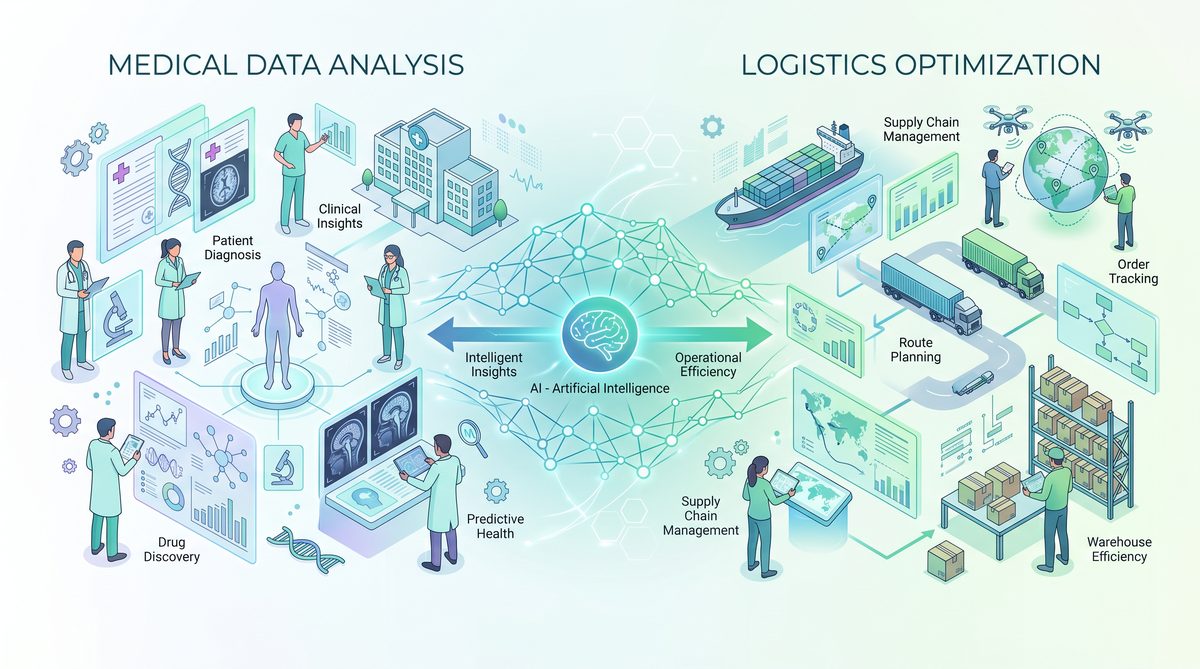
The finance sector continues to be a fertile ground for AI automation, where precision, speed, and regulatory compliance are paramount. In 2026, AI agents from leading providers such as OpenAI and Claude have become essential for automating complex financial processes ranging from fraud detection to portfolio management and customer personalization.
Y-Combinator startups focused on fintech have harnessed AI agents to deliver hyper-personalized financial advice and automated wealth management solutions. These agents analyze vast datasets, including market trends, transaction histories, and user behavior, to generate tailored investment strategies and risk assessments in real-time.
Global enterprises like SAP have integrated AI agents within their financial analytics platforms to automate compliance monitoring and reporting. By continuously scanning regulatory updates and cross-referencing transaction data, these agents reduce compliance risk and operational costs.
Law firms specializing in financial regulation utilize AI agents to perform contract analysis, regulatory research, and due diligence faster and more accurately than manual methods. Claude’s advanced reasoning capabilities enable these firms to identify potential legal risks and draft compliant documentation efficiently.
Reddit’s finance-related communities leverage AI agents to moderate discussions on investment advice, detect misinformation, and facilitate knowledge sharing, thereby fostering a safer and more informed environment for retail investors.
Beyond these applications, AI agents in finance are increasingly employed for real-time fraud detection using anomaly detection algorithms that analyze transaction patterns across multiple channels and geographies. These systems are augmented by continuous learning mechanisms that adapt to emerging fraud tactics.
Portfolio management AI agents utilize reinforcement learning to dynamically rebalance asset allocations in response to market volatility and client risk preferences, optimizing returns while mitigating downside risks.
Moreover, AI-driven credit risk modeling has advanced significantly, with agents integrating alternative data sources like social media signals and behavioral analytics to provide more inclusive and accurate credit assessments, broadening financial access.
The following table summarizes the critical AI automation applications and their impacts within the finance sector:
| Entity | AI Agent Platform | Application | Business Impact |
|---|---|---|---|
| Y-Combinator Fintech Startups | OpenAI GPT-5 | Personalized financial advisory and portfolio management | 20% ROI improvement, enhanced client retention |
| SAP | OpenAI GPT-5 with SAP Financial Suite | Automated compliance and risk monitoring | 35% reduction in compliance costs |
| Law Firms (Financial Regulation) | Claude 3 | Contract review and regulatory research | 50% faster document processing |
| Reddit Finance Communities | Claude 3 | Discussion moderation and misinformation detection | Reduced misinformation incidents by 45% |
AI agents’ ability to operate continuously and process unstructured data at scale has enabled financial institutions to improve fraud detection accuracy, minimize human error, and offer more transparent and compliant services. Furthermore, ongoing advancements in explainable AI help enterprises meet regulatory expectations by providing audit trails and rationale for AI-driven decisions.
With the proliferation of decentralized finance (DeFi) and digital assets, AI automation also plays a critical role in monitoring transactions and assessing counterparty risk in near real-time, reinforcing financial system stability.
Case studies from major financial institutions show that integrating AI agents with blockchain analytics tools enhances anti-money laundering (AML) efforts by detecting suspicious patterns across complex transaction networks more efficiently than traditional rule-based systems.
Additionally, AI-powered customer segmentation and behavioral analytics enable tailored marketing campaigns and product recommendations, increasing cross-sell and upsell opportunities while improving client satisfaction.
Ethical AI use in finance is increasingly scrutinized, with regulators emphasizing fairness and transparency. Enterprises are adopting bias mitigation techniques in training data and model evaluation to uphold these principles.
OpenAI Codex vs Claude Code: Complete Business Adoption Guide for Enterprise Teams in 2026
Healthcare AI Agents: From Diagnostics to Patient Engagement
The healthcare industry in 2026 is witnessing unprecedented integration of AI agents in clinical workflows, patient management, and administrative processes. Enterprises across hospitals, insurance providers, and healthcare startups utilize AI models from OpenAI and Claude to improve outcomes, reduce costs, and streamline operations.
Y-Combinator healthtech startups employ AI agents for intelligent symptom triage, personalized treatment recommendations, and remote patient monitoring. These agents analyze electronic health records (EHR), medical imaging, and genomics data to assist clinicians in diagnosing complex conditions faster and more accurately.
Large healthcare systems and insurers use AI agents to automate claims processing, detect billing anomalies, and manage care coordination across multiple providers. Claude-powered virtual assistants help patients schedule appointments, access personalized health information, and receive medication reminders, significantly improving engagement and adherence.
Law firms specializing in healthcare compliance employ AI to review regulatory documents and monitor changes in healthcare laws, ensuring their clients remain compliant with evolving standards such as HIPAA and the European GDPR.
Advanced AI agents are also integrated into clinical decision support systems (CDSS), assisting physicians by flagging potential drug interactions, suggesting diagnostic tests, and predicting patient deterioration risks based on continuous vital sign monitoring.
Multi-modal AI models combine natural language processing of clinical notes with computer vision analysis of medical images such as X-rays, MRIs, and pathology slides to enhance diagnostic accuracy. This fusion of modalities facilitates early detection of diseases like cancer and cardiovascular conditions.
Furthermore, AI agents are employed in population health management, identifying high-risk patient cohorts and recommending preventive interventions, thereby reducing hospital readmissions and improving public health outcomes.
Below is a detailed overview of AI agent applications and their tangible benefits in healthcare:
| Stakeholder | AI Agent Platform | Use Case | Results |
|---|---|---|---|
| Healthtech Startups (Y-Combinator) | OpenAI GPT-5 | Symptom triage and diagnostic assistance | 30% reduction in misdiagnosis rates |
| Hospitals & Insurers | Claude 3 | Claims automation and patient virtual assistants | 25% faster claims processing, 40% improved patient adherence |
| Healthcare Law Firms | Claude 3 | Regulatory document review and compliance monitoring | Significantly faster compliance updates and reduced risk |
AI agents have also been instrumental in accelerating medical research by automating literature review and clinical trial matching, enabling faster discovery and deployment of treatments. The integration of multi-modal AI, including medical imaging analysis combined with natural language processing of clinical notes, enhances diagnostic accuracy and personalized care pathways.
Privacy and ethical considerations remain paramount, with enterprises implementing robust AI governance frameworks to ensure transparency, bias mitigation, and patient data protection. Such frameworks are increasingly supported by AI model providers through secure APIs and customizable privacy-preserving configurations.
Innovative applications include AI agents assisting in mental health by providing conversational support and monitoring behavioral indicators, offering scalable solutions to address global shortages of mental health professionals.
Finally, interoperability standards such as FHIR (Fast Healthcare Interoperability Resources) enable AI agents to integrate seamlessly with diverse healthcare IT systems, ensuring data consistency and facilitating coordinated care.
Claude for Small Business: Anthropic Launches 15 AI Skills and 8 Connectors for SMB Automation
Supply Chain Automation: AI Agents Optimizing Global Operations
Supply chain management has undergone a paradigm shift with the adoption of AI agents capable of automating procurement, logistics, demand forecasting, and supplier risk assessment. Enterprises including SAP, logistics startups, and retail platforms leverage AI automation to build resilient and agile supply chains responsive to market dynamics.
Y-Combinator startups focused on supply chain AI have developed autonomous agent platforms that communicate with suppliers, negotiate contracts, and optimize inventory levels using reinforcement learning and predictive analytics. This has led to significant reductions in stockouts and overstocks, translating into improved profitability.
SAP integrates AI agents deeply within its enterprise resource planning (ERP) systems to provide end-to-end supply chain visibility. These agents analyze real-time data from IoT-enabled warehouses, transportation fleets, and supplier networks to predict delays, optimize routing, and automate replenishment.
Law firms specializing in commercial and trade law use AI agents to monitor regulatory changes affecting cross-border shipments and assist clients with contract compliance and dispute resolution.
Beyond traditional logistics, AI agents now enable dynamic supply chain orchestration, adjusting procurement and delivery plans in real-time based on live demand signals, supplier capacity, and geopolitical developments.
Advanced AI-driven scenario modeling allows enterprises to simulate the impact of disruptions such as port closures, tariff changes, or natural disasters, enabling proactive risk mitigation and contingency planning.
AI agents also facilitate collaboration across multi-tier supplier networks, sharing predictive insights and coordinating workflows to optimize the entire supply chain ecosystem.
Below is a comparative summary of AI agent applications in supply chain automation:
| Organization | AI Agent Platform | Functionality | Impact |
|---|---|---|---|
| Y-Combinator Supply Chain Startups | OpenAI GPT-5 | Autonomous procurement and inventory optimization | 15% cost savings, 20% reduction in stockouts |
| SAP | OpenAI GPT-5 + SAP ERP | Real-time supply chain visibility and predictive analytics | Improved on-time delivery by 18% |
| Law Firms (Trade & Commercial) | Claude 3 | Regulatory monitoring and contract compliance | Reduced legal disputes by 30% |
AI agents’ capacity to process multi-source data streams and automate decision-making has enhanced supply chain resilience, particularly in responding to disruptions caused by geopolitical events, natural disasters, and fluctuating consumer demand. These intelligent agents collaborate with human planners, providing scenario simulations and recommending mitigation strategies.
Moreover, ethical sourcing and sustainability tracking have become integral to supply chain AI automation, with agents verifying supplier certifications and monitoring environmental impact metrics to align with corporate social responsibility goals.
Emerging technologies such as digital twins of supply chains, powered by AI agents, enable real-time visualization and control, facilitating continuous optimization and rapid response to changing conditions.
Enterprises are also exploring blockchain integration with AI agents to enhance transparency and traceability, ensuring authenticity and compliance across complex global supply networks.
Conclusion: The Strategic Imperative of AI Agents in Enterprise Automation
By 2026, AI agents have transcended basic automation to become strategic partners driving innovation, efficiency, and competitive advantage across diverse enterprise functions. The convergence of advanced LLMs, multi-modal AI capabilities, and domain-specific fine-tuning enables organizations—from agile startups to multinational corporations and specialized law firms—to harness AI’s full potential.
The case studies across customer service, finance, healthcare, and supply chain demonstrate tangible benefits including operational cost reduction, enhanced decision-making accuracy, improved customer and patient experiences, and robust regulatory compliance. Enterprises are also investing heavily in AI governance, ethical frameworks, and continuous model optimization to ensure sustainable and responsible AI adoption.
Looking forward, the evolution of AI agents will likely emphasize greater autonomy, deeper contextual understanding, and seamless collaboration with human teams. As AI technologies mature, their integration into enterprise ecosystems will become more sophisticated, enabling organizations to navigate complexity and uncertainty with agility and confidence.
Furthermore, the rise of explainable AI and interactive learning paradigms will empower enterprises to maintain control over AI agents, ensuring alignment with organizational goals and ethical standards. Cross-industry collaboration and knowledge sharing will accelerate innovation, driving the next wave of AI automation breakthroughs.
Ultimately, enterprise AI agents represent a paradigm shift—not merely tools for efficiency but catalysts for transforming how businesses operate, innovate, and create value in a rapidly changing digital world.
Access 40,000+ AI Prompts for ChatGPT, Claude & Codex — Free!
Subscribe to get instant access to our complete Notion Prompt Library — the largest curated collection of prompts for ChatGPT, Claude, OpenAI Codex, and other leading AI models. Optimized for real-world workflows across coding, research, content creation, and business.