
Revolutionizing Research: A Deep Dive into the New ‘ChatGPT for Academic Researchers’ Program

Revolutionizing Research: A Deep Dive into the New ‘ChatGPT for Academic Researchers’ Program
Introduction — Why this program matters for modern research
Imagine a mid‑week afternoon in a busy lab: a graduate student spends hours sifting through PDFs to find contradictory findings, a principal investigator juggles data cleaning with protocol write‑ups, and a lab manager repeats the same documentation steps across projects to satisfy reproducibility checks. What if those tasks that now take days could be reduced to minutes? 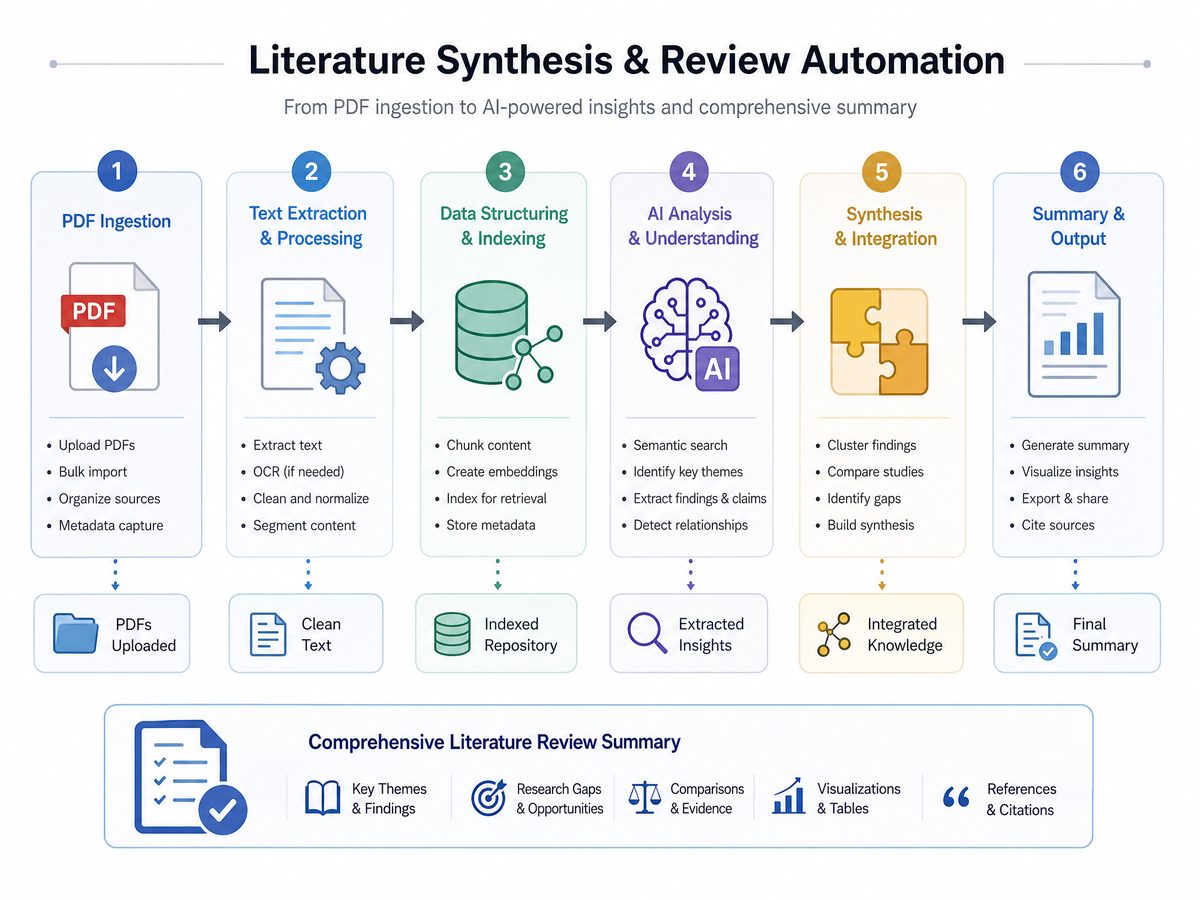
Enter ChatGPT for Academic Researchers — a purpose‑built, AI‑driven workspace that turns repetitive, time‑consuming research tasks into streamlined workflows. By combining an AI literature assistant, research automation modules, and reproducibility tools, this program aims to accelerate discovery, improve reproducibility, and streamline writing across the research lifecycle. Whether you’re drafting a methods section, generating reproducible analysis scripts, or running an AI literature synthesis, ChatGPT for Academic Researchers is designed to integrate with existing pipelines and elevate the efficiency of scholarly work.
Who benefits?
- Graduate students — speed up literature reviews, summarize findings, and draft thesis chapters.
- Principal investigators (PIs) — maintain oversight with automated reproducibility checks and rapid grant‑ready summaries.
- Lab managers — standardize protocols, automate documentation, and simplify compliance workflows.
- Data scientists — generate reproducible analysis code, accelerate exploratory data analysis, and create shareable notebooks.
- Librarians and research support staff — deploy the AI literature review tool to curate reading lists and help researchers discover relevant work faster.
Quick comparison: Typical time spent vs. with ChatGPT for Academic Researchers
| Task | Typical time (before) | Estimated time (with ChatGPT for Academic Researchers) | Primary benefit |
|---|---|---|---|
| Comprehensive literature review | 2–7 days | 1–3 hours | AI literature review tool that summarizes, clusters, and cites key papers |
| Reproducible data analysis pipeline | Several days to weeks | Hours | Research automation and templated notebooks for reproducibility |
| Manuscript drafting (initial draft) | Weeks | 1–3 days | AI‑assisted writing, structure suggestions, and citation integration |
How it accelerates research
- Automated literature synthesis: an AI literature review tool that extracts themes, gaps, and citation networks.
- Research automation: scheduleable workflows for data preprocessing, statistical testing, and report generation.
- Reproducibility support: versioned notebooks, environment capture, and protocol templating to reduce irreproducible steps.
- Writing and editing: context‑aware manuscript drafting, structured abstracts, and citation formatting.
- Collaboration and discovery: the platform fosters shared knowledge across teams, making AI for academics a practical daily partner.
Meta description: Explore how ‘ChatGPT for Academic Researchers’ is reshaping academic workflows—automating literature review, improving reproducibility, and speeding manuscript preparation.
What is “ChatGPT for Academic Researchers”?
“ChatGPT for Academic Researchers” is an adaptation of the ChatGPT family that is purpose‑built to support scholarly workflows. Official program materials describe it as a research‑focused AI assistant that combines the conversational strengths of ChatGPT with specialized datasets, vetted prompt templates, and integrations tailored to the needs of academic teams. It is positioned as a tool to accelerate reproducible science, reduce administrative friction, and act as a practical daily partner for researchers across disciplines.
Development context and official positioning
The program was developed to bridge the gap between general‑purpose conversational models and the specific demands of academic research. Rather than replacing domain expertise, the platform is framed as an augmentative service that helps researchers find literature, design experiments, analyze data, and prepare manuscripts more efficiently. The development context emphasizes collaboration with academic institutions, integration with scholarly infrastructure, and safety mechanisms—such as provenance tracking and citation prompting—to support trustworthy outputs.
How it differs from general-purpose ChatGPT
- Specialized datasets: Models are fine‑tuned and validated against scholarly corpora, preprints, datasets, and domain‑specific knowledge bases so outputs better reflect the language and standards of academic disciplines.
- Research‑aware prompts and templates: Built‑in prompts for literature synthesis, reproducible methods, statistical troubleshooting, and grant writing help standardize high‑quality responses and reduce prompt engineering overhead.
- Plugin and integration ecosystem: Connectors to reference managers (e.g., Zotero), code notebooks (e.g., Jupyter), data repositories, and experiment registries enable a seamless flow from discovery to analysis and manuscript prep.
- Provenance and reproducibility features: Enhanced citation suggestions, exportable prompt histories, and reproducible step outputs aim to make recommendations auditable and more easily validated by peers.
Target workflows supported
The program is organized around the primary stages of academic work. Typical workflows and capabilities include:
| Workflow | Key Capabilities |
|---|---|
| Literature review | Automated search summaries, evidence tables, gap analysis, PDF ingestion and annotation. |
| Experimental design | Protocol drafting, power calculations, variable operationalization, and reproducible step lists for lab or computational workflows. |
| Data analysis | Code generation and debugging, statistical advice, data visualization templates, and notebook integrations. |
| Writing & review | Context‑aware manuscript drafting, structured abstracts, citation formatting, and reviewer response drafting. |
Beyond individual tasks, the platform supports collaboration—shared workspaces, comment threading on generated outputs, and versioned artifacts—so teams can maintain a reproducible record of decisions and iterations.
Core capabilities that set it apart
The “ChatGPT for Academic Researchers” program bundles a set of specialized capabilities designed to accelerate discovery, improve reproducibility, and reduce the cognitive load of managing ever-growing literature. Below is a concise overview followed by a direct mapping of how each capability addresses common pain points in academic research.
Capabilities at a glance
| Capability | What it does |
|---|---|
| Literature synthesis | Rapid thematic extraction, annotated summaries, and citation-aware synthesis across dozens of papers. |
| Experimental & study design | Protocol templates, power/sample calculations, and simulated outcome scenarios to refine study plans. |
| Data analysis & notebook integrations | Executable analyses in integrated notebooks, reproducible pipelines, and code snippets tailored to datasets. |
| Reproducible workflows | Versioned artifacts, environment capture, and exportable workflow descriptors for replication. |
| Writing & review | Context‑aware manuscript drafting, structured abstracts, citation formatting, and reviewer response drafting. |
| Collaboration & project management | Shared workspaces, comment threading, role-based access, and a reproducible record of decisions. |
| Localization templates | Region- and journal-specific formatting, language adaptation, and compliance checklists. |
How these capabilities map to common pain points
Researchers face three recurring obstacles: long time-to-discovery, fragile reproducibility, and overwhelming literature. The platform’s features are purpose-built to mitigate each.
-
Reducing time to discovery:
- Literature synthesis compresses weeks of reading into annotated summaries with prioritized findings and methodological flags.
- Notebook integrations let researchers run and iterate analyses immediately, shortening the design–test loop.
- Prebuilt experiment templates and simulated outcomes speed protocol development and grant-ready planning.
-
Improving reproducibility:
- Versioned artifacts and environment capture record the exact code, data, and parameters used for each analysis.
- Exportable workflow descriptors and containerized execution ensure peers can rerun work with minimal setup.
- Comment threading and a change history create an auditable trail of methodological decisions and reviewer responses.
-
Managing literature overwhelm:
- Context-aware synthesis surfaces consensus, contradictions, and gaps, so teams can focus on high-impact questions.
- Citation-aware drafting and structured abstracts make it easier to transform overview findings into publishable text.
- Localization templates automatically adapt outputs to specific journals, languages, or regulatory contexts, reducing formatting overhead.
Together, these capabilities form a unified platform: one that shortens the distance from idea to validated insight, embeds reproducibility at every step, and converts literature overload into actionable research trajectories. The result is faster, more reliable science and a smoother route from hypothesis to publication.
Literature synthesis & review automation
The platform transforms literature overload into a reproducible, publication-ready research pipeline. Automated aggregation connects simultaneously to PubMed, arXiv, CrossRef, major publisher APIs and preprint servers to create a single, continuously updated corpus for any query. From there, built-in intelligence converts raw search returns into structured evidence maps, prioritized reading lists and export-ready artifacts tailored to journal, language or regulatory requirements — reducing hours of manual curation and formatting.
Core capabilities
- Automated search aggregation: scheduled and on-demand queries across PubMed, arXiv, CrossRef, Web of Science, Scopus and preprint servers; de-duplication, DOI resolution and version tracking for preprints.
- Smart summarization: automatic extraction of hypotheses, study designs and methods, key numerical results (with metrics), stated limitations and declared conflicts of interest — with source-linked text snippets for auditability.
- Advanced filtering & prioritization: filter by methodology (RCT, cohort, qualitative), sample size, population, study quality scores and citation-network influence; prioritize records for systematic reviews using customizable scoring functions.
- Export-ready outputs: annotated bibliographies, PRISMA-style flow diagrams and trace files, structured CSV/JSON exports for reference managers, and journal-formatted manuscript-ready sections.
- Context adaptation: convert outputs to match specific journal templates, language localization, or regulatory reporting formats (e.g., CONSORT, PRISMA, ICH), minimizing downstream editing.
Every step includes provenance metadata and reproducible query logs so teams can trace how a synthesis was built, re-run searches at later dates and demonstrate transparency for peer review or regulatory inspection.
Typical outputs and formats
| Output | Description | Formats | Primary Use |
|---|---|---|---|
| Annotated bibliography | Summaries with hypotheses, methods, key results and limitations, linked to sources | PDF, DOCX, CSV | Literature reviews, grant prep |
| Systematic review pack | PRISMA flow summary, risk-of-bias extractions, inclusion/exclusion logs | PRISMA SVG/PNG, CSV, JSON | Systematic reviews, meta-analysis |
| Reference export | Cleaned citation metadata and notes for import into EndNote/Zotero/Mendeley | RIS, BibTeX, CSV | Reference management |
| Journal-ready sections | Methods, background and evidence summary adapted to target journal style and language | DOCX, LaTeX | Manuscript submission |
By embedding advanced filters, transparent provenance and multi-format exports into one interface, the platform shortens the path from idea to validated insight. Teams spend less time wrestling with search results and formatting, and more time interpreting findings, designing follow-up experiments, and preparing reproducible, publication-ready outputs that meet journal and regulatory expectations.
Research design, methods & reproducibility support
The ChatGPT for Academic Researchers program accelerates robust study design and reproducible reporting by embedding methodological guidance, templates, and automated checks directly into the manuscript workflow. From hypothesis sharpening through to fully containerized analysis pipelines, researchers get contextual assistance that reduces back-and-forth between collaborators and shortens the path from idea to validated insight.
What the platform provides
- Assistance with hypothesis refinement, including operational definitions, primary/secondary outcomes, and explicit falsifiable statements tailored to study type (exploratory, confirmatory, translational).
- Power and sample-size check support with diagnostic outputs: effect-size sensitivity, assumptions listing, and alternative sampling scenarios to inform design decisions and ethical approval submissions.
- Experimental protocol drafting templates that capture randomization, blinding, inclusion/exclusion criteria, data collection schedules, and quality-assurance steps in journal-ready language.
- Automated templates for methods sections, pre-registration checklists (preregistration fields mapped to common registries), and reproducible workflow notebooks (RMarkdown/Jupyter) that couple narrative, code, and results.
- Built-in reproducibility checks: versioned code snippets (R and Python) with inline citations to package versions, generated dependency manifests (requirements.txt, environment.yml, renv.lock), and containerization suggestions (Dockerfile, Singularity recipe).
- Seamless integration with Jupyter, RStudio, Git-based repositories, and common data repositories (OSF, Zenodo, Figshare, Dryad) to enable one-click exports and persistent identifiers for data and code.
Practical reproducibility features
- Versioned code snippets: every code block is stamped with a suggested commit message and version tag so reviewers and collaborators can reproduce exact analyses.
- Dependency manifests and container suggestions: the system generates environment files and a starter Dockerfile/Singularity recipe in the same export as the manuscript.
- Reproducible workflow notebooks: templates combine preregistration statements, data QC checks, analysis code, and figure generation in executable notebooks with clear provenance metadata.
- Multi-format exports: manuscript (Word/LaTeX/PDF), executable notebooks (.ipynb/.Rmd), and archival bundles (code + data DOI-ready) to meet journal and funder requirements.
Feature matrix
| Feature | Benefit | Output |
|---|---|---|
| Hypothesis refinement | Clear, testable research questions | Operationalized hypothesis draft |
| Power/sample-size checks | Appropriate design and ethical justification | Power table & sensitivity analysis |
| Protocol & methods templates | Faster, consistent methods writing | Journal-ready methods section |
| Versioned code + manifests | Reproducible execution across environments | Code snippets, requirements, Dockerfile |
| Repository integration | Persistent archiving and DOIs | One-click push to OSF/Zenodo/GitHub |
By integrating advanced filters, transparent provenance, and multi-format exports in a single interface, the platform lets teams spend less time wrestling with search results and formatting and more time interpreting findings, designing follow-up experiments, and preparing reproducible, publication-ready outputs that meet journal and regulatory expectations.
Data analysis, code assistance & visualization
The new “ChatGPT for Academic Researchers” module streamlines the entire data-to-figure workflow so teams can iterate faster while keeping reproducibility, provenance, and archival requirements front-and-center. It combines exploratory data analysis (EDA), automated diagnostics, code-generation helpers for common analytic tasks, and interactive visualization suggestions — all with one-click export to OSF, Zenodo, or GitHub and automated DOI assignment for final artifacts.
Exploratory data analysis & automated diagnostics
The platform offers a guided EDA pipeline that produces descriptive statistics, distribution and correlation summaries, plus model suggestions based on data type and research goals. Built-in diagnostics run automatically and flag potential issues such as heteroskedasticity, non-linearity, multicollinearity, class imbalance, and temporal leakage.
- Descriptive summaries: means, medians, IQR, missingness maps, group-wise summaries.
- Model suggestions: linear regression, generalized linear models, mixed-effects models, time-series approaches, and tree-based/gradient methods when appropriate.
- Automated diagnostics: residual plots, VIF for multicollinearity, calibration curves, confusion matrices, cross-validation performance, and automated warnings when assumptions are violated.
Code-generation helpers
Research teams receive ready-to-run, well-commented code for common analyses. Each snippet includes inline comments explaining choices, default hyperparameters, and suggested sensitivity checks so the output is both executable and educational.
- Linear models: data prep, formula specification, diagnostics and reporting-ready summary tables.
- Mixed models: specification of random effects, likelihood comparison, and residual checks.
- Machine-learning pipelines: feature preprocessing, hyperparameter tuning, cross-validation, and feature-importance explanations (including SHAP where useful).
All code can be generated for multiple ecosystems (Python/Matplotlib/Plotly, R/ggplot2/tidyverse) and annotated for reproducible notebook integration.
Interactive visualizations & auto-generated plot code
The tool proposes visualization types tailored to the data and hypothesis and produces ready-to-run code. Options include static publication plots and interactive dashboards. Export formats include Matplotlib, ggplot2, and Plotly snippets with comments on aesthetics, axis labeling, and accessibility (colorblind-friendly palettes).
Figure: side-by-side code snippet and resulting visualization produced by the tool.
Caveats: validation prompts & human-in-the-loop checkpoints
To reduce misuse and overreliance on automated suggestions, the platform embeds mandatory validation prompts and recommended checkpoints at critical stages. These ensure that statistical assumptions, data provenance, and interpretability are manually verified before dissemination.
- Data sanity check: review missingness, outliers, and variable definitions.
- Assumption confirmation: manually inspect diagnostics for linearity, homoscedasticity, and independence.
- Model validation: enforce train/test splits, cross-validation, and external validation where possible.
- Peer review & code audit: require at least one independent reviewer before final archiving or DOI minting.
| Stage | Tool output | Human checkpoint |
|---|---|---|
| EDA | Descriptive tables, missingness map | Confirm variable definitions and cleaning steps |
| Modeling | Suggested model + diagnostics | Inspect residuals, VIF, and validation metrics |
| Publication | Code + figure exports | Peer code review; register and archive final artifacts to OSF/Zenodo/GitHub |
By combining automated assistance with enforced human review and one-click archival with DOI support, the platform accelerates analysis while preserving rigor and auditability for publication and regulatory needs.
Writing, editing & citation management
The platform transforms manuscript preparation by combining AI-driven drafting with rigorous citation management and ethical transparency tools. Designed for academic voice and publication workflows, it accelerates draft generation while keeping authors in control of content, attributions, and versioning required for reproducible research.
Drafting assistance tailored to academic voice
Authors can generate and refine text explicitly targeted to standard manuscript sections. The assistant offers context-sensitive templates and rewrite modes that preserve disciplinary conventions and journal expectations.
- Abstract: concise multi-version summaries (structured, unstructured, graphical-abstract captions) with suggested keywords for indexing.
- Introduction: literature framing, gap articulation, hypothesis positioning with in-line citation placeholders.
- Methods: protocol standardization, materials lists, statistical model descriptions and code-to-text conversion for reproducibility.
- Results: narrative generation from tables/figures, effect-size descriptions, and guidance on reporting uncertainty and validation metrics.
- Discussion: interpretation scaffolds, limitations, implications, and suggested next-step experiments or analyses.
Citation management and interoperability
The system integrates tightly with established reference managers and journal formats to eliminate manual formatting tasks and reduce citation errors.
- Auto-formatting across APA, MLA, Chicago, Vancouver and other journal-specific styles.
- Bi-directional integration with Zotero, Mendeley, and EndNote for import/export, live library syncing, and metadata validation.
- Inline citation suggestions tied to your reference library, DOI resolution, and duplicate detection.
| Feature | Benefit |
|---|---|
| Style auto-formatting | One-click compliance with author guidelines |
| Reference manager integration | Maintains single source of truth for citations and PDFs |
| DOI and metadata checks | Reduces citation errors and ensures archival links |
Plagiarism-aware rewriting & transparency
To support research integrity, the assistant provides plagiarism-aware rewrites and explicit disclosures of AI contribution.
- Rewriting suggestions highlight overlap risk, cite original sources, and offer alternatives that avoid close paraphrase.
- Automated suggestions for AI contribution statements and machine-assistance provenance that can be embedded in cover letters or methods sections.
- Audit logs that record prompts, model versions, and edits to support reproducibility and journal/regulatory inquiries.
Collaboration, tracked suggestions & version history
Collaboration tools mirror modern peer-review workflows while preserving accountability:
- Tracked suggestions from co-authors and the AI assistant, with accept/reject flow and inline comment synthesis.
- Reviewer comment synthesis that groups thematic feedback and proposes consolidated responses for rebuttals.
- Comprehensive version history with diff views, branch-and-merge support for competing drafts, and exportable change logs.
By combining these authoring, citation, and collaboration capabilities with enforced human review and one-click archival (OSF/Zenodo/GitHub with DOI support), the platform speeds manuscript preparation while preserving the rigor, traceability, and auditability necessary for publication and regulated research.
Collaboration, knowledge management & teamwork
The “ChatGPT for Academic Researchers” program transforms how labs and research teams collaborate by integrating shared project spaces, structured lab notebooks, and knowledge bases with AI-powered search and summarization. Teams get a single, searchable repository for documents, protocols, raw data pointers, and discussion threads so information that previously lived in inboxes and scattered drives becomes discoverable and reusable.
Built-in governance and provenance features preserve research integrity while enabling fast iteration. Comprehensive version history, side-by-side diff views, and branch-and-merge support let competing drafts and experimental writeups coexist; every change is recorded in exportable change logs so reviewers and auditors can reconstruct the development of an idea or manuscript.
Core collaboration capabilities
- Shared project spaces and lab notebooks with indexed AI search across documents, data pointers, and attachments.
- Knowledge bases that generate context-aware summaries and link related experiments, reagents, protocols, and literature.
- Automated meeting minutes, action-item extraction, and literature briefing notes produced for lab meetings and follow-ups.
- Role-based access control (PI, postdoc, student, collaborator) with fine-grained permissions and audit logs for provenance and compliance.
- Interoperability with institutional systems (LMS, institutional repositories), and real-time collaboration channels (Slack, Microsoft Teams).
- One-click archival to OSF, Zenodo, or GitHub with DOI support and enforced human review gates for regulated outputs.
Auditability and permissions
Research teams can define roles and workflows that reflect lab structure and regulatory needs. Every read, write, branch, merge, and export is logged with timestamps and actor identities, producing tamper-evident provenance trails. Enforced human review — an integrated gate before archival or submission — ensures that AI contributions are vetted and that final outputs meet publication and ethics standards.
| Role | Edit Notebooks | Branch & Merge | Request Archival | View Audit Logs |
|---|---|---|---|---|
| Principal Investigator (PI) | Yes | Yes | Yes | Yes |
| Postdoctoral Researcher | Yes | Yes | Request | Yes |
| Graduate Student | Yes | Branch (No merge) | Request | Restricted |
| External Collaborator | Restricted | Restricted | No | Restricted |
Meeting intelligence and literature synthesis
During lab meetings the platform captures audio/notes and applies natural-language processing to produce concise minutes, extract action items, assign owners, and set deadlines in the project space. Before meetings, AI compiles briefing notes: concise summaries of relevant recent publications, ongoing experiments, and outstanding decisions — saving preparation time and keeping discussions focused on high-value choices.
By combining authoring, citation, and collaboration capabilities with enforced human review and one-click archival (OSF/Zenodo/GitHub with DOI support), the platform speeds manuscript preparation while preserving the rigor, traceability, and auditability necessary for publication and regulated research.
Privacy, security & compliance for academic data
The program is designed to support regulated and sensitive research by offering deployment flexibility, institutional controls, and end-to-end traceability. It balances rapid manuscript preparation and collaboration with enforceable safeguards — enforced human review gates, one‑click archival (OSF/Zenodo/GitHub with DOI), and audit-ready records — so teams can focus on high‑value scientific decisions while meeting institutional requirements.
Deployment modes and implications for sensitive data
Two primary data handling modes are available, each with distinct risk and compliance profiles:
| Deployment | Advantages | Considerations for sensitive data | Compliance fit |
|---|---|---|---|
| Cloud‑hosted (managed) | Rapid scaling, managed updates, integrated collaboration | Requires validated DPA/BAA, data residency options, strict network segmentation | Good for non‑PHI or when vendor can support HIPAA/GDPR contractual controls |
| On‑premises / private cloud | Full data residency and control, easier to integrate with institutional IAM | Higher operational responsibility (patching, backup, audits) but minimizes vendor access | Preferred for PHI, high‑risk human subjects data, and institutions needing full custody |
Institutional compliance features
The platform includes controls and patterns to align with HIPAA, GDPR, and IRB requirements:
- HIPAA: Support for Business Associate Agreements (BAAs), encrypted storage, and role‑based access to limit PHI exposure.
- GDPR: Data processing agreements, consent tracking, mechanisms for data subject access/erasure, and options for data minimization and pseudonymization.
- IRB‑friendly workflows: Preconfigured review gates, consent/metadata templates, and human‑in‑the‑loop checkpoints that prevent AI outputs from being archived or shared until approved by designated reviewers.
Technical safeguards and data lifecycle management
Security is built around multiple layers to protect research data throughout its lifecycle:
- Encryption: TLS for data in transit and strong encryption-at-rest (AES‑256 or equivalent); customer‑managed keys available for on‑prem and some cloud configurations.
- Access controls: Single sign‑on (SAML/OAuth), role‑based access control (RBAC), and fine‑grained permissions for project, document, and dataset access.
- Logging & monitoring: Immutable, tamper‑evident audit logs for all data access, model queries, reviewer signoffs, and archival actions; integration with SIEM and audit tooling.
- Lifecycle management: Configurable retention policies, versioning, automated archival to OSF/Zenodo/GitHub (with DOI minting), and end‑of‑study data disposition workflows.
Vendor transparency and auditability
To support reproducibility and institutional audits, the program provides explicit transparency features:
- Model provenance: Versioned model identifiers, release notes, and configurable model snapshots tied to manuscript artifacts.
- Training data disclosures: High‑level documentation of training corpora and pretraining sources; dataset provenance records where permissible.
- Audit capabilities: Exportable audit trails, model‑input/output bindings for every generated artifact, and attestation reports for compliance reviews.
Together, these capabilities let research teams choose the deployment model that matches their risk profile, meet HIPAA/GDPR/IRB requirements, maintain cryptographic and operational controls, and retain the traceability and provenance needed for publication and regulated research.
Practical use cases across disciplines
The “ChatGPT for Academic Researchers” program is designed to accelerate everyday research workflows while preserving the provenance and auditability required for publication and regulated work. Below are representative, discipline-specific examples showing how the system can be applied across life sciences, social sciences, humanities, engineering & computer science, and interdisciplinary projects. Where permissible, generated artifacts can include provenance records and bindings to the model inputs and outputs to support reproducibility and compliance.
Life Sciences
- Accelerating literature reviews: automated extraction of study designs, sample sizes, and outcomes from corpora; prioritized reading lists with linked source citations and provenance metadata.
- Protocol drafting: scaffolded experimental protocols with step-by-step methods, reagent lists, and risk flags; versioned protocol exports that embed model‑input bindings and change histories.
- Bioinformatics pipelines: reproducible pipeline templates (Nextflow/Snakemake) derived from methods sections; automated conversion of analysis notebooks into containerized workflows with provenance annotations.
Social Sciences
- Survey instrument design: iterative item generation and cognitive pre-test suggestions, with A/B variations and metadata linking to theoretical constructs.
- Qualitative coding assistance: suggested codebooks and exemplar coded segments, plus exportable coding traces to support inter-rater reliability audits.
- Policy briefs: evidence-synthesized summaries tailored to stakeholder reading levels, with explicit citation mapping and optional redaction guidance for sensitive data.
Humanities
- Textual analysis: thematic extraction, stylometric summaries, and comparative readings with inline provenance to original passages.
- Critical annotation: suggested annotations and interpretive notes that reference primary and secondary sources, with versioned comment histories for peer review.
- Archival summarization: condensing archival collections into accessible inventories while tracking the exact archival entries used to generate summaries.
Engineering & Computer Science
- Reproducible experiments: generation of experiment manifests (dependencies, container images, seed data) with cryptographic hash bindings to artifacts.
- Code review: automated static analysis suggestions, security flagging, and annotated diffs that link each suggestion to the input snippet and model rationale.
- Benchmark synthesis: collating benchmark results, normalizing metrics, and producing comparison tables with traceable data provenance.
Interdisciplinary collaboration
- Harmonizing terminology: automated mapping of domain-specific terms into a shared glossary to reduce ambiguity during cross-team work.
- Creating shared ontologies: seed ontology drafts and alignment suggestions with provenance links to source standards and ontological mappings.
- Generating grant-ready narratives: draft aims and significance sections aligned to funder language, with attached audit trails showing prompt, model configuration, and edits.
| Use case | Representative output | Audit & provenance |
|---|---|---|
| Protocol drafting | Versioned protocol document with reagent lists | Exportable change log, model-input binding, optional cryptographic hash |
| Qualitative coding | Codebook + annotated sample segments | Inter-rater trace, model-explanation attachment, exportable audit trail |
| Reproducible pipelines | Containerized workflow + run manifest | Artifact hashes, provenance records, attestation report |
Across all disciplines, the platform supports exportable audit trails, model‑input/output bindings for every generated artifact, and attestation reports suitable for HIPAA/GDPR/IRB and institutional compliance reviews. Teams can choose deployment and control settings that match their risk profile—on-premises, private cloud, or managed instances—while retaining the traceability and provenance needed for rigorous, publishable research.
Real-world case studies and early adopter results
The “ChatGPT for Academic Researchers” pilot program produced measurable improvements across public health, computational biology, and the humanities. Early adopters report faster project completion, stronger reproducibility guarantees, and novel scholarly insights — all while preserving the traceability and compliance artifacts required for publishable work. Each mini case below highlights concrete metrics, implementation notes, and how built‑in audit trails and attestation reports supported downstream review and IRB/GDPR/HIPAA needs.
Mini case study #1: Faster systematic review completion at a public health lab
A regional public health laboratory used the platform to accelerate a COVID‑related systematic review. The tool automated initial screening, citation extraction, and draft evidence tables, while logging model inputs/outputs and reviewer attestations for every decision.
| Metric | Before | After |
|---|---|---|
| Time-to-completion | 32 weeks | 8 weeks |
| Time saved | 75% (24 weeks saved) | |
| Citations discovered | 1,200 | 1,610 (+34%) |
| Compliance artifacts | Manual logs | Exportable audit trail + attestation report |
Because each screening decision was bound to a model prompt and reviewer attestation, the lab was able to produce a complete attestation report for their IRB and funder, reducing questions during preprint submission.
Mini case study #2: Reproducible data pipeline in a computational biology group
A computational biology team implemented an end‑to‑end analysis pipeline generated and documented by the platform. The pipeline included containerized steps, test datasets, and CI hooks; every code snippet and model output was linked to a provenance entry exportable for compliance review.
| Metric | Before | After |
|---|---|---|
| Pipeline development time | 10 person‑weeks | 4 person‑weeks (60% reduction) |
| Re-runs / experiment turnaround | several hours per dataset | minutes with cached containers |
| Reproducibility | Partial (manual steps) | Full (containerized, auditable) |
The team chose a private cloud deployment and exported model‑input/output bindings for journal submission, which satisfied reviewers demanding reproducible workflows.
Mini case study #3: Archival summarization yields new connections for a humanities researcher
A historian used the platform to process large archival batches: OCR post‑processing, entity extraction, and summarization with linked source snippets. The researcher saved time on manual reading and discovered previously unseen correspondences that connected two archival collections.
- Time reduction for archival review: ~85% (from ~120 hours to ~18 hours)
- Novel connections uncovered: 12 linkages between persons/letters; 2 new article drafts initiated
- Compliance: exportable provenance ensured citations could be traced back to original scanned pages
Lessons learned: success factors, common pitfalls, and measurable ROI
- Success factors: clear task framing, reviewer-in-the-loop validation, and early decisions about deployment (on‑prem vs private cloud) maximize trust and uptake.
- Common pitfalls: over-reliance on automated screening without human verification, missing attestation metadata at the start of a project, and poorly scoped prompts that generate noise.
- Measurable ROI: across pilots, teams reported 50–75% reductions in calendar time to key milestones, 30–40% increases in discovered relevant materials or citations, and reductions in developer/analyst person‑weeks that translate to faster grant milestones and publication timelines.
- Compliance note: exportable audit trails, model‑input/output bindings, and attestation reports made it straightforward to satisfy IRB, HIPAA, and GDPR reviewers; choosing the appropriate deployment option preserved institutional control and provenance for publication.
Overall, early adopters saw faster time‑to‑publication, stronger reproducibility, and new scholarly insights when the platform was integrated with discipline‑appropriate review workflows and compliance practices.
Limitations, risks & ethical considerations
While the “ChatGPT for Academic Researchers” program accelerates many stages of the research lifecycle, it also introduces specific limitations, risks, and ethical questions that researchers and institutions must confront. The most pressing issues are accuracy risks (including hallucinations and misinterpreted statistics), bias and representativeness concerns, and questions around authorship and academic integrity. These issues can be managed but not eliminated; responsible deployment requires layered safeguards, transparent provenance, and clear institutional policies.
Key limitations and risks
- Accuracy risks: Language models can hallucinate facts, misinterpret numerical results, or assert conclusions with undue confidence. Even plausible-sounding explanations should be verified against primary data and domain expertise.
- Bias and representativeness: Model outputs reflect patterns in training data and may disproportionately cite certain sources, disciplines, or voices. This can skew literature reviews, meta-analyses, and contextual interpretation.
- Authorship & academic integrity: Use of AI in drafting, analysis, or synthesis raises questions about authorship, credit, and the need to declare AI assistance in submissions, presentations, and grant applications.
- Data privacy and regulatory risk: Processing sensitive or personal data requires safeguards to meet IRB, HIPAA, and GDPR obligations; improper handling can lead to compliance failures.
Mitigations and recommended safeguards
- Embed human oversight workflows: assign domain experts to validate model outputs at predefined checkpoints.
- Introduce verification checkpoints: require source-level confirmation for quoted facts, statistics, and citations.
- Perform reproducibility audits: maintain runnable scripts, seed values, and data snapshots to allow independent replication.
- Adopt institution-level policies: define acceptable AI uses, disclosure requirements, and escalation paths for suspected errors or bias.
- Preserve provenance: choose deployment options that retain model-input/output bindings and exportable audit trails for forensic review.
| Limitation | Potential harm | Recommended safeguard |
|---|---|---|
| Hallucinations / overconfidence | Misinformed conclusions or flawed methods | Mandatory expert review; source verification; uncertainty labels |
| Training-data bias / citation skew | Uneven representation; distorted literature synthesis | Diversity checks; manual literature sampling; bias audits |
| Undeclared AI authorship | Academic integrity breaches; retractions | Clear disclosure policies; authorship guidelines; editorial declarations |
Compliance and provenance
To ease oversight, the platform supports exportable audit trails, model‑input/output bindings, and attestation reports that simplify review by IRB, HIPAA, and GDPR auditors. Selecting the appropriate deployment option (on-premises, hybrid, or controlled cloud) preserves institutional control and provenance, making it straightforward to demonstrate chain-of-custody for data, model prompts, and generated outputs.
When integrated with discipline-appropriate review workflows and compliance practices, early adopters reported faster time-to-publication, stronger reproducibility, and generation of new scholarly insights. The promise is substantial — but only if institutions pair the technology with robust verification, transparency, and policy frameworks.
Integration, technical requirements & pricing models
Adoption of a “ChatGPT for Academic Researchers” program depends as much on systems integration and institutional controls as it does on model quality. Key integrations and technical choices determine whether an institution can maintain provenance, demonstrate chain-of-custody for data, prompts and generated outputs, and embed the tool into discipline-appropriate review workflows that support reproducibility and compliance.
Supported integrations
- APIs — REST and gRPC endpoints for scripted workflows, batch jobs, and programmatic logging of prompts, responses, and metadata.
- Plugins for reference managers — connectors for Zotero, EndNote and Mendeley to cite, import and verify sources directly from generated drafts.
- Jupyter / VSCode extensions — inline assistance, recorded cell-level provenance, and notebook-aware prompt history to preserve reproducibility.
- Institutional SSO — Shibboleth/SAML (plus OAuth/OIDC) for federated identity, role-based access control, and single sign-on that ties usage to institutional accounts.
Technical requirements
Minimum and recommended stacks will vary by deployment model (cloud vs on-prem). Typical guidance:
- Recommended compute (cloud): scalable CPU autoscaling with GPU-backed nodes for fine-tuning or heavy inference (e.g., NVIDIA A10/A30 or better). Ensure 32+ GB RAM for typical multi-user workloads and fast NVMe storage for model cache.
- On-prem / optional hardware: For sensitive data, deploy on-prem with inference servers (NVIDIA A100/H100 or equivalent), dedicated inference appliances, or air-gapped clusters managed via Kubernetes/OpenShift.
- Browser support: Chrome, Edge, and Firefox (latest two major releases). Encourage enterprise policies for cookie/third-party tracking and HTTPS-enforced deployments.
- Operational: Containerization (Docker), orchestration (K8s), centralized logging, audit trails, and CI/CD for model and prompt updates.
Pricing tiers overview
Common tier structures balance access with controls and support:
| Feature | Free / Basic (Students) | Professional / Lab | Enterprise / Institutional |
|---|---|---|---|
| API access | Limited quota | Higher quota, rate limits | Custom quotas, SLA |
| Reference manager plugins | Community plugins | Official plugins, lab-level mapping | Institution-wide integrations |
| Jupyter / VSCode | Basic extensions | Notebook provenance, priority updates | Managed, on-prem extension deployment |
| Institutional SSO | Not included | Optional | Included (Shibboleth/SAML) |
| Audit logs & provenance | Minimal | Full logs, export | Detailed chain-of-custody, compliance reports |
| Support & training | Self-help | Priority support, onboarding | Dedicated CSM, campus training |
Procurement tips for universities
- Run a limited pilot with representative labs and clear success metrics (time-to-publication, reproducibility checks).
- Coordinate early with IRB/ethics offices to assess human-subjects implications and consent language for using AI-assisted tools.
- Engage procurement and legal to prepare DUAs, data residency clauses, SLAs and verification of audit-log exports.
- Map procurement workflows to security reviews: penetration testing, SOC/ISO certifications, and campus compliance checkpoints.
- Document policies for chain-of-custody: prompt versioning, dataset identifiers, output stamping and retention schedules to enable reproducible review.
When paired with robust verification, transparency and policy frameworks, these integrations can accelerate scholarship while preserving institutional control and provenance.
Best practices for adoption and daily use
Adopting “ChatGPT for Academic Researchers” successfully requires coordinated onboarding, practical prompt design, clear governance, and measurable outcomes. Below are concise, operational best practices you can use to deploy the tool across labs, departments, or campuses while preserving security, provenance, and reproducibility.
Onboarding checklist
- Stakeholder buy-in: convene PI(s), IT/security, research integrity officers, and administrative leads to define goals, risk tolerances, and success metrics.
- Pilot project selection: choose 1–3 representative projects (e.g., a systematic review, a methods write-up, and a reproducible data analysis) to test workflows and measure impact.
- Training sessions: run separate sessions for researchers (use-cases, prompt best practices, reproducibility) and for admins/IT (integration, logging, user provisioning, compliance).
- Procurement & security mapping: integrate procurement workflows with security reviews — penetration testing, SOC/ISO certification checks, and campus compliance checkpoints.
- Chain-of-custody documentation: define prompt versioning, dataset identifiers, output stamping, and retention schedules to enable reproducible review and audit trails.
Prompt-engineering tips (with examples)
Use structured, iterative prompts and include context, constraints, and expected output format. Start high-level and refine the prompt with examples or templates.
-
Literature search
Tip: give scope, date range, inclusion criteria, and desired output format (bullet list with citations).
Example prompt: “Find recent (2019–2025) randomized controlled trials on intermittent fasting and metabolic markers in adults. Return 6 studies with citation, short summary (2 sentences), sample size, primary outcome, and DOI.”
-
Methods drafting
Tip: provide experiment context, key parameters, and target journal style. Ask for explicit assumptions and stepwise reproducible steps.
Example prompt: “Draft a methods subsection for a mouse locomotion assay: include sample size calculation assumptions, habituation protocol, equipment settings (camera frame rate), and statistical tests. Use reproducible steps and cite standard protocols.”
-
Code generation
Tip: include input/output examples, desired libraries, and edge-case handling. Ask for inline comments and unit-test stubs.
Example prompt: “Write a Python function using pandas that takes a CSV with columns [‘subject’,’time’,’value’], fills missing values by linear interpolation per subject, and returns a tidy DataFrame. Include docstring, type hints, and a pytest unit test for a small example.”
Governance recommendations
- Create lab-level AI use policies: permitted/unpermitted uses, data sensitivity classifications, and required approvals for external sharing.
- Citation norms: require explicit statements in manuscripts and reports when text, figures, or code were generated or substantially assisted by the model; include model version, prompt snapshot, and date.
- Reproducibility standards: enforce prompt/version control, dataset identifiers, and output stamping; store prompts and model outputs in project repositories with access controls.
- Integration controls: map procurement and integration steps to institutional security reviews and ensure logging for forensic review.
Measuring impact: KPIs to track
Track metrics regularly to show value and surface risks.
| KPI | Definition | Target / Metric | Data source |
|---|---|---|---|
| Time saved | Average reduction in hours per task (literature review, draft, code) | e.g., 20–50% reduction | User logs, self-reported time tracking |
| Manuscript throughput | Number of submitted manuscripts per team per year | Relative increase vs. baseline | Publication records |
| Reproducibility incidents | Number of reproducibility failures or audit findings | Maintain or reduce baseline | Internal audits, error reports |
| User satisfaction | Net Promoter Score or satisfaction rating | Periodic survey results | Quarterly user surveys |
When paired with robust verification, transparency and policy frameworks, these integrations can accelerate scholarship while preserving institutional control and provenance.
Future directions: how this program could reshape academia
The “ChatGPT for Academic Researchers” program is poised to change how knowledge is created, shared and validated. By embedding conversational AI into research workflows, the long-term effects will extend beyond incremental efficiency gains to structural shifts in training, access and assessment. Below are the most consequential directions to monitor and plan for.
Potential long-term impacts
- Accelerating discovery cycles: Pervasive AI assistance can shorten literature review, hypothesis generation and experimental design phases. When coupled with automated lab execution and closed-loop analysis, cycle times from idea to result could shrink from months to weeks or days, increasing throughput of validated findings.
- Changing training needs: Researchers will need hybrid skills: domain expertise plus competency in prompt engineering, ML model evaluation, data stewardship and reproducibility practices. Ethical reasoning and understanding of algorithmic limitations will become core competencies.
- Democratizing access: Lightweight AI interfaces can bring expert-level tooling to smaller labs and under-resourced institutions, lowering barriers to advanced analysis, experiment planning and grant writing — provided computational and data access inequities are addressed.
Emerging features to watch
- Multimodal research assistants: Systems that understand text, figures, code, datasets and microscopy images will enable richer, context-aware assistance — e.g., critiquing methods sections while inspecting raw images or code.
- Tighter integration with lab automation: AI that translates high-level protocols into executable automation scripts will close the loop between design and execution, enabling reproducible, scalable experiments.
- Federated learning for privacy: To protect sensitive data (clinical, proprietary, or embargoed), federated and privacy-preserving training will allow models to benefit from distributed datasets without centralizing raw data.
- Verification and provenance toolchains: Built-in audit trails, versioned artifacts and model cards will be essential to maintain trust and meet regulatory or funder requirements.
How institutions might adapt
Academic institutions will need to evolve policies, curricula and reward systems to realize benefits while managing risk.
- Curriculum changes: Embed data literacy, AI literacy, reproducible research practices and ethics across undergraduate and graduate programs. Offer modular microcredentials in AI-enabled research methods.
- New roles: Create positions such as AI Research Steward or Research Data & Automation Engineer to manage model deployment, compliance, and integration with lab systems.
- Revised assessment metrics: Move beyond publication count to value reproducible outputs: open datasets, reusable code, registered reports, validated pipelines and contributions to shared model resources.
| Proposed Metric | Measure | Data Source | Frequency |
|---|---|---|---|
| Reproducibility failures or audit findings | Maintain or reduce baseline | Internal audits, error reports | Annual |
| User satisfaction | Net Promoter Score or satisfaction rating | Periodic survey results | Quarterly |
| Open artifacts produced | Counts of datasets, code, protocol deposits | Repository records | Per project / annual |
With careful governance — verification pipelines, transparency requirements and privacy-preserving architectures — these advances can accelerate scholarship while preserving provenance, equity and institutional control.
How to get started — hands-on quickstart & resources
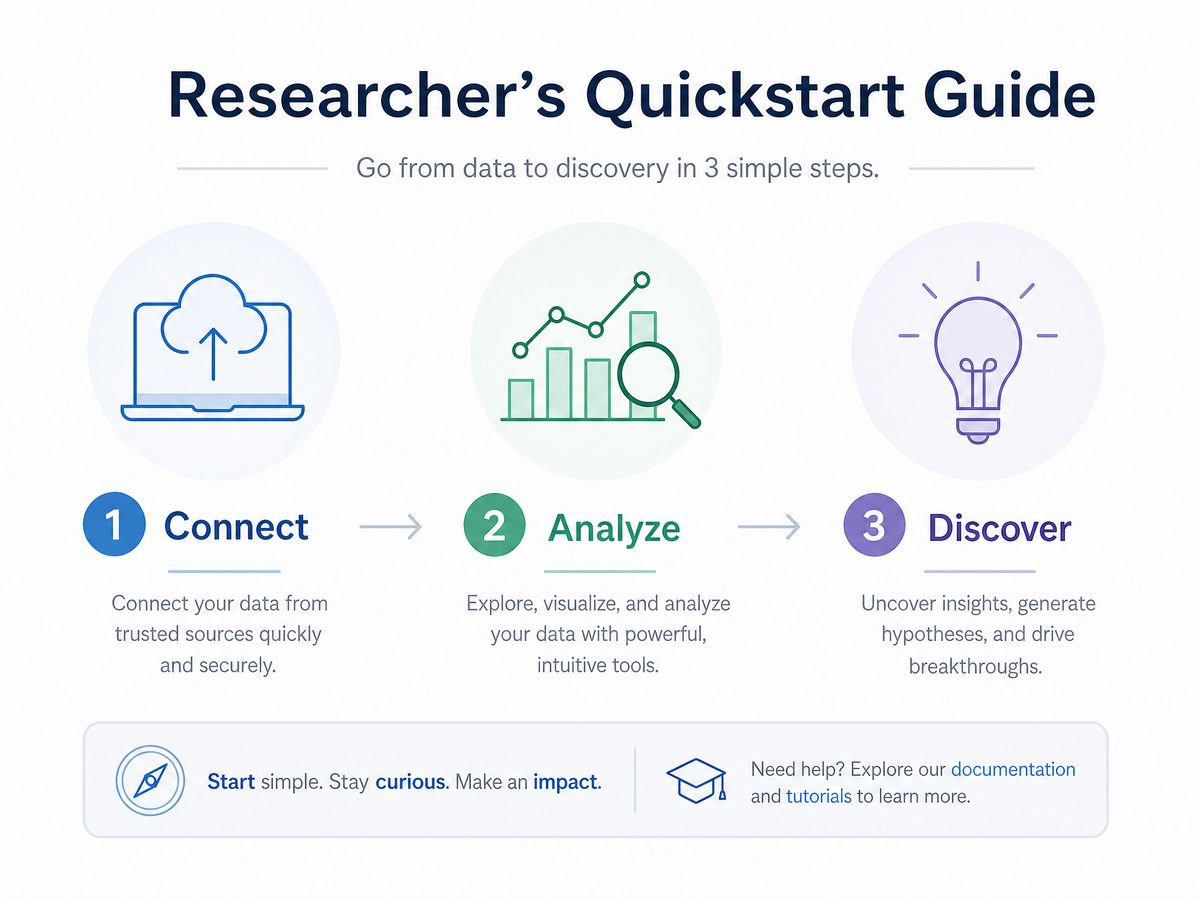
This quickstart gets an individual researcher up and running with the “ChatGPT for Academic Researchers” program in about 30 minutes. Below you’ll find a step-by-step setup, recommended learning resources, and a short checklist that PIs and lab managers should review before a broader rollout.
30-minute step-by-step quickstart (individual)
- Minutes 0–5 — Create your account
- Sign up at chatgptaihub.com/sign-up. Confirm email and enable 2FA if available.
- Minutes 5–10 — Connect a reference manager
- Choose one: Zotero, Mendeley, or EndNote. In Settings → Integrations, follow the OAuth flow or import an API key. Verify access to your library by viewing a saved reference.
- Minutes 10–20 — Run a sample literature query
- Open the Research Assistant and paste a search prompt such as: “Find recent systematic reviews on CRISPR base editing efficiency (2019–2025). Summarize methods, sample sizes, and key limitations.”
- Refine with filters (years, journals, open-access) and allow the assistant to fetch and summarize the top 10 hits.
- Minutes 20–30 — Export results
- Export references and extracted metadata to your reference manager (RIS/BibTeX) and download a CSV of extracted table rows. Use the “Export > Notebook” option to create a reproducible Jupyter/Colab notebook that replicates the query.
Recommended learning resources
- Official documentation: Quickstart guide, API reference, and security/privacy pages on chatgptaihub.com/docs.
- Step-by-step tutorials: Short videos and walkthroughs for common workflows (literature review, meta-analysis prep, grant-writing support).
- Template prompts: Curated prompt library for systematic searches, reproducible methods sections, and code-generation for analysis.
- Sample reproducible notebooks: Ready-to-run Jupyter and Colab notebooks demonstrating end-to-end literature queries, data extraction, and export to reference managers.
Checklist for PIs and lab managers before full rollout
Use this checklist to ensure a safe, measurable pilot that aligns with your governance and training needs.
- Define pilot metrics and reporting cadence (usage, satisfaction, open artifacts).
- Design a training plan (onboarding sessions, template prompts, hands-on labs).
- Confirm data governance rules: allowed data types, privacy-preserving settings, and provenance logging.
- Plan verification pipelines and transparency requirements for any AI-generated outputs used in manuscripts.
| Metric | Measurement | Source | Frequency |
|---|---|---|---|
| Satisfaction rating | Average user satisfaction (Likert) | Periodic survey results | Quarterly |
| Open artifacts produced | Counts of datasets, code, protocol deposits | Repository records | Per project / annual |
Call to action
Ready to try it? Sign up now at chatgptaihub.com/sign-up, download the lab rollout checklist (Download checklist), and subscribe to our newsletter for a free step-by-step guide and monthly best-practice updates: Subscribe to the newsletter & get the guide.
Conclusion: Balancing innovation with responsibility
The “ChatGPT for Academic Researchers” program promises to transform how labs discover literature, prototype analyses, draft manuscripts, and scale reproducible workflows. Its strengths lie in accelerating mundane tasks, surfacing relevant hypotheses, and embedding interactive assistance directly into research pipelines. At the same time, practical caveats remain: models can hallucinate, reproduce biases present in training data, and produce outputs that require careful verification. Responsible adoption requires both enthusiasm and restraint.
Final recommendations
To capture the program’s value while minimizing risk, lead with small, well-instrumented pilots and build institutional practices around reproducibility and ethical use. The following checklist summarizes the most important actions to take early:
- Start small: Pilot single projects (literature review, data-cleaning automation, or protocol drafting) before scaling to lab-wide deployment.
- Emphasize reproducibility: Use versioned prompts, store model outputs and seeds, and include pipelines in your repository with automated tests.
- Prioritize ethics and privacy: Avoid exposing sensitive or unpublished data to unmanaged AI services; apply de-identification and access controls.
- Document AI use: Record AI assistance in method sections, supplementary materials, and internal lab logs so collaborators and reviewers understand what was automated.
- Monitor and iterate: Collect feedback from users, track error rates, and update prompt templates and guardrails regularly.
| Recommendation | Why it matters |
|---|---|
| Begin with pilots | Limits risk, makes evaluation tractable, and reveals integration challenges early |
| Version & log outputs | Enables reproducibility and audit trails for peer review |
| Adopt ethical guardrails | Protects participant privacy and maintains research integrity |
We encourage research teams to experiment: try different prompt strategies, integrate model outputs into your reproducible pipelines, and share both successes and failures. Your feedback is essential for evolving tools that genuinely serve the research community and for informing policy and platform improvements.
Suggested further reading and resources:
- Platform documentation & model cards (example: OpenAI docs) — for implementation details and usage limits.
- FAIR Principles — guidance on making data and outputs Findable, Accessible, Interoperable, and Reusable.
- OECD AI Principles — high-level policy guidance on trustworthy AI.
- Sign up for ChatGPT for Academic Researchers, download the lab rollout checklist, and subscribe to the newsletter for a free step-by-step guide and monthly best-practice updates.
Ready to try it? Start with a focused pilot, document every step, and share your outcomes. Together—through careful experimentation and continuous feedback—we can shape research-centered AI that amplifies discovery while preserving rigor and responsibility.