
50 GPT-5.5 Prompts for Startup Founders: Pitch Decks, Business Plans, Fundraising, and Growth Strategy

50 GPT-5.5 Prompts for Startup Founders: Pitch Decks, Business Plans, Fundraising, and Growth Strategy
Developing a startup from idea to growth involves countless decisions, strategic plans, and communication efforts. GPT-5.5, OpenAI’s latest language model, offers startup founders a powerful AI assistant that can accelerate tasks ranging from market research and competitor analysis to fundraising pitch decks and growth strategy development.
This comprehensive guide presents 50 production-ready GPT-5.5 prompts organized by the startup lifecycle stage. Each prompt is carefully crafted with context on when and how to use it, along with the expected output format. Whether you are validating your idea, building a financial model, preparing investor materials, or scaling operations, these prompts will help you leverage GPT-5.5 effectively.
Developers, founders, and AI enthusiasts will find actionable examples, data-driven insights, and expert advice to integrate AI into their startup workflows seamlessly.
Leveraging GPT-5.5 for Market Research and Validation
One of the earliest and most critical tasks for startup founders is understanding the market landscape. GPT-5.5 can help generate detailed competitor profiles by analyzing publicly available data, summarizing strengths and weaknesses, and identifying market gaps. For example, you can prompt GPT-5.5 with “Create a competitive analysis report for fintech startups focusing on peer-to-peer lending platforms in the US, including top 5 competitors, their market share, and unique value propositions.” This output can then inform your positioning and product development strategies.
Additionally, GPT-5.5 can assist in crafting customer surveys or interview scripts tailored to your target demographic. Using prompts like “Draft 10 open-ended questions to validate demand for an eco-friendly packaging solution targeting small e-commerce businesses,” helps founders collect focused feedback early in the product cycle.
Creating High-Impact Pitch Decks
A compelling pitch deck is essential to capture investor interest. GPT-5.5 can generate slide content ranging from executive summaries to detailed financial projections. For instance, a prompt such as “Write a persuasive problem statement for a pitch deck addressing inefficiencies in last-mile delivery” can yield concise, impactful text that resonates with VCs. Moreover, GPT-5.5 can help format content tailored to different audiences, whether angel investors, seed funds, or strategic partners.
In addition to text, you can integrate GPT-5.5 outputs with visualization tools by requesting structured data like revenue forecasts or user growth curves in JSON format. This data-driven approach ensures your presentations are both informative and visually engaging.
Developing Robust Business Plans and Financial Models
Beyond pitch decks, detailed business plans are often required to map out operational and financial milestones. GPT-5.5 can assist in generating comprehensive sections such as market opportunity analysis, go-to-market strategies, and risk assessments. For example, “Outline a 3-year operational plan for a SaaS startup targeting small businesses, including hiring timelines, technology roadmap, and customer acquisition goals” can provide a realistic blueprint for scaling.
Financial modeling is another area where GPT-5.5 shines. By feeding it key assumptions like average revenue per user (ARPU), churn rates, and customer acquisition costs (CAC), you can prompt GPT-5.5 to build detailed projections. A sample prompt might be, “Generate a 5-year financial projection for a subscription-based fitness app with initial monthly revenue of $50,000 growing at 15% per month and a 5% monthly churn rate.” GPT-5.5 can return cash flow statements, profit and loss summaries, and break-even analyses that founders can refine and validate.
Fundraising Strategy and Investor Communication
Successful fundraising requires clear communication of your startup’s value and vision. GPT-5.5 can draft personalized investor emails, term sheet summaries, and FAQ documents to streamline interactions. For example, “Compose a follow-up email to an investor after a pitch meeting, reiterating key points and addressing potential concerns about market competition” can save time while maintaining professionalism.
Furthermore, GPT-5.5 can simulate investor Q&A sessions, helping founders anticipate tough questions and prepare confident responses. This practice can significantly improve pitch delivery and investor confidence.
Optimizing Growth and Scaling Operations
Once the startup gains traction, GPT-5.5 supports growth strategies by analyzing customer segmentation, identifying upsell opportunities, and recommending marketing campaigns. A prompt like “Develop a targeted email marketing sequence for re-engaging inactive users of a mobile gaming app” can yield actionable scripts that boost retention.
Operationally, GPT-5.5 can generate SOPs (Standard Operating Procedures), hiring frameworks, and performance review templates tailored to startup culture and growth stage. For instance, “Create a hiring plan for a customer success team expanding from 3 to 10 members over 12 months” provides founders with scalable frameworks to manage rapid growth efficiently.
By integrating GPT-5.5 into daily workflows, startup founders can reduce manual workload, enhance strategic decision-making, and accelerate their path from concept to market leadership.
Ideation & Validation
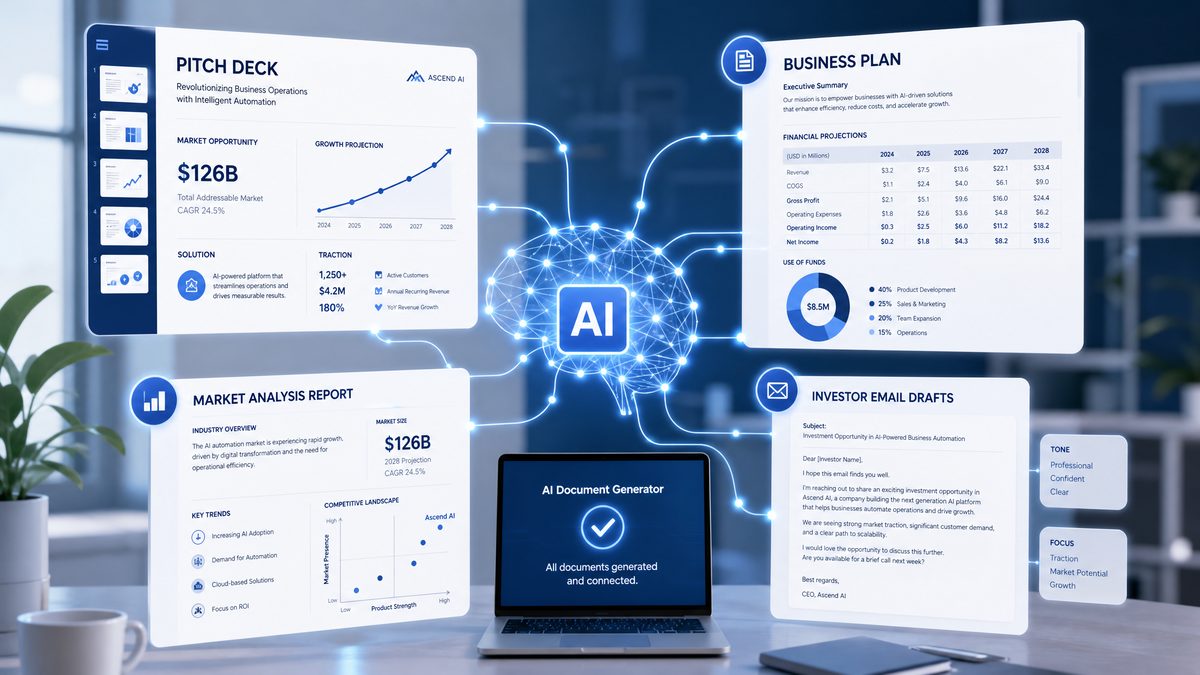
At the earliest stage of your startup journey, understanding the market, sizing the opportunity, and benchmarking competitors are critical. The following GPT-5.5 prompts will help you conduct rapid market research, generate competitor analysis reports, and validate your product ideas with data-backed insights.
1. Market Research Overview Prompt
"Generate a detailed market research report for the [industry] sector focused on [target demographic] in [region]. Include market size, growth trends over the past 5 years, key drivers, and challenges. Format the output with an executive summary, data tables, and actionable insights."

2. Competitor Landscape Analysis Prompt
"List and analyze top 10 competitors in the [industry] market. For each competitor, include company background, product offerings, pricing strategy, market share estimates, strengths, weaknesses, and recent news or funding rounds. Present the analysis as a table with qualitative commentary."

3. Customer Persona Generation Prompt
"Create 3 detailed customer personas for a startup offering [product/service] targeting [demographic]. Include demographics, pain points, buying motivations, preferred channels, and behavior patterns. Provide each persona in a structured format suitable for marketing and product development teams."

4. Idea Validation Summary Prompt
"Summarize existing market demand and potential risks for a startup idea centered on [product/service]. Incorporate insights from recent industry reports, customer reviews, and competitor gaps. Provide clear recommendations on viability and positioning."

5. Trend Analysis Prompt
"Identify emerging trends and technologies impacting the [industry] sector over the next 3-5 years. Include quantifiable data points and examples of startups or incumbents leveraging these trends. Format the output as a bullet point list with concise explanations."
Practical Tips for Using These Prompts Effectively
When deploying these GPT-5.5 prompts, specificity is key. Instead of generic inputs like “tech industry,” specify sub-sectors such as “AI-powered healthcare diagnostics in North America” to obtain more granular insights. This precision helps tailor the generated reports to your startup’s unique context, improving relevance and usability.
Additionally, consider layering multiple prompts for comprehensive analysis. For example, start with the Market Research Overview to understand macro trends, then use Competitor Landscape Analysis to map out direct rivals, followed by Customer Persona Generation to align product features with user needs.
Example: SaaS Startup Targeting Remote Teams
Using prompt #1, the GPT model might reveal that the global remote collaboration software market is projected to grow at a CAGR of 14.3% through 2028, driven by increased adoption of hybrid work models and cloud infrastructure. Prompt #2 would then identify competitors like Zoom, Slack, and Microsoft Teams, comparing their pricing tiers, integration capabilities, and user retention strategies.
Prompt #3 could generate personas such as “Tech-Savvy Team Lead,” “Budget-Conscious Freelancer,” and “Enterprise IT Manager,” each with specific pain points like managing distributed projects, minimizing subscription costs, or ensuring data security compliance. These personas can directly inform marketing messaging and feature prioritization.
Integrating Data Tables and Visualizations
To augment the textual output, request GPT-5.5 to format key data in tables or charts. For instance, a competitor matrix could display pricing, feature sets, and customer ratings side-by-side for easy comparison. Similarly, a market size table can break down revenue by region or customer segment, highlighting high-opportunity niches.
Example data table snippet generated via prompt #2:
| Competitor     | Pricing Model     | Market Share | Strengths                 | Weaknesses               |
|----------------|-------------------|--------------|---------------------------|--------------------------|
| Zoom           | Freemium + Paid   | 35%          | High video quality, APIs  | Security concerns        |
| Slack          | Subscription      | 25%          | Integrations, UX          | Overlapping features     |
| Microsoft Teams| Included in 365   | 30%          | Enterprise adoption       | Complexity for new users |
Leveraging Trend Analysis for Strategic Planning
Prompt #5 is especially valuable when preparing for future disruptions. For example, in the fintech sector, emerging trends like decentralized finance (DeFi) and AI-driven credit scoring are reshaping competitive dynamics. Including concrete examples of startups such as Chainlink for DeFi or Zest AI for credit scoring illustrates how innovation is materializing.
Quantifiable data, such as “DeFi assets under management grew from $1 billion in 2019 to $80 billion in 2023,” helps validate the trend’s significance. This enables founders to align product roadmaps with market evolution and investor interests.
Best Practices for Prompt Refinement
Iterate on prompt wording based on initial outputs. For example, if competitor analysis lacks depth on funding rounds, explicitly request “Include the latest funding rounds with amounts and lead investors.” Similarly, ask for “Customer reviews highlighting product pain points” to enrich idea validation summaries.
Incorporating domain-specific jargon and metrics (e.g., churn rate, average revenue per user) also enhances relevance, producing outputs that resonate with investors and internal stakeholders alike.
By combining these GPT-5.5 prompts with thoughtful input and iterative refinement, startups can accelerate their market understanding, reduce uncertainty, and craft strategies grounded in actionable intelligence.
Example usage: For a SaaS startup targeting remote teams, prompt #1 can help identify market growth projections, while prompt #2 delivers a competitive matrix to differentiate your product.
Maximizing the output quality of AI models requires carefully crafted prompts tailored to specific professional workflows. Our detailed collection in 20 Battle-Tested Prompts for developers in 2026 provides battle-tested prompt templates that professionals can immediately apply to their daily work, covering everything from initial ideation to final deliverable production.
Business Planning
Once your idea is validated, building robust financial models, unit economics, and business plans is essential to attract investors and guide your team. GPT-5.5 can automate the generation of these documents by leveraging structured inputs.
6. Financial Model Framework Prompt
"Create a 3-year financial projection model for a startup in [industry], assuming the following inputs: initial funding $[amount], monthly burn rate $[amount], expected revenue growth % per month, customer acquisition cost $[amount], lifetime value $[amount]. Output the model as a CSV-compatible table with monthly breakdowns for revenue, expenses, EBITDA, and cash flow."

7. Unit Economics Analysis Prompt
"Analyze the unit economics of a [product/service] startup with the following metrics: average revenue per user (ARPU) $[amount], customer acquisition cost (CAC) $[amount], churn rate % [value], gross margin % [value]. Provide insights on profitability per customer and recommend strategies to improve margins."

8. Business Plan Executive Summary Prompt
"Write a concise executive summary for a business plan of a startup in [industry], focusing on the problem, solution, market opportunity, competitive advantage, business model, and financial highlights. Target the summary towards potential investors and include key metrics and milestones."

9. Go-To-Market Strategy Outline Prompt
"Develop a go-to-market strategy outline for launching a [product/service] startup targeting [customer segment]. Include positioning, messaging, sales channels, pricing strategy, and initial marketing tactics. Format as a bullet point plan."

10. SWOT Analysis Prompt
"Conduct a SWOT analysis for a startup focused on [product/service]. List strengths, weaknesses, opportunities, and threats based on market data and competitor insights. Provide recommendations to leverage strengths and mitigate risks."
For example, prompt #6 can be used to generate a dynamic spreadsheet-ready financial forecast to plug directly into your investor pitch deck. This forecast can include detailed monthly revenue streams segmented by product line, cost of goods sold (COGS), operating expenses, and capital expenditures, allowing for scenario planning such as best-case, expected, and worst-case financial outcomes. By inputting specific assumptions like a 5% monthly revenue growth or a fixed churn rate, the model can dynamically adjust projections, highlighting key inflection points such as breakeven months or cash runway duration.
Deepening Unit Economics Analysis
Prompt #7 goes beyond simple calculations by enabling you to assess customer profitability at a granular level. For instance, if your ARPU is $50, CAC is $30, churn rate is 5%, and gross margin stands at 70%, the prompt can help calculate the Customer Lifetime Value (LTV) and compare it against CAC to evaluate the payback period. Moreover, GPT-5.5 can suggest actionable strategies like optimizing marketing channels to reduce CAC or enhancing product features to decrease churn, thereby improving unit economics sustainably.
Crafting Investor-Ready Business Plans
With prompt #8, you can generate an executive summary that succinctly communicates your startup’s value proposition. For example, a SaaS startup targeting small businesses could highlight a $10 billion market opportunity, a unique AI-driven feature reducing manual workload by 40%, and a scalable subscription model with projected ARR growth of 150% year-over-year. Including specific milestones—such as reaching 10,000 paying customers within 18 months or achieving a 90% customer retention rate—makes the summary compelling and grounded in measurable outcomes.
Optimizing Go-To-Market Strategies
Prompt #9 allows you to build targeted GTM plans tailored to customer segments. For example, if launching a fitness app aimed at millennials, the strategy could recommend leveraging influencer partnerships on Instagram, offering freemium pricing tiers, and utilizing referral bonuses to accelerate user acquisition. It can also suggest sales channels like app stores, direct B2B partnerships with gyms, or integrations with wearable devices, providing a multi-pronged approach to maximize reach and conversion.
Comprehensive SWOT Analysis
Using prompt #10, you gain a data-driven SWOT assessment that not only identifies internal strengths like proprietary technology or a skilled founding team but also external opportunities such as emerging market trends or regulatory changes favoring your niche. Simultaneously, it highlights weaknesses like limited brand awareness or high customer acquisition costs and threats including intense competition or economic downturns. The prompt can also generate tailored recommendations, such as prioritizing product differentiation or establishing strategic alliances to mitigate risks.
Integrating these GPT-5.5 prompts into your startup workflow accelerates the creation of high-quality, actionable business documents, reduces manual workload, and enhances strategic decision-making. For example, you can combine the financial model outputs with your SWOT analysis to identify which financial levers could be adjusted to capitalize on market opportunities or shore up weaknesses.
Additionally, here is a sample code snippet showing how you might programmatically generate a financial model prompt with dynamic inputs in Python:
def generate_financial_model_prompt(industry, funding, burn_rate, revenue_growth, cac, ltv):
    prompt = (
        f"Create a 3-year financial projection model for a startup in {industry}, "
        f"assuming the following inputs: initial funding ${funding}, monthly burn rate ${burn_rate}, "
        f"expected revenue growth {revenue_growth}% per month, customer acquisition cost ${cac}, "
        f"lifetime value ${ltv}. Output the model as a CSV-compatible table with monthly breakdowns "
        f"for revenue, expenses, EBITDA, and cash flow."
    )
    return prompt

# Example usage:
print(generate_financial_model_prompt('healthtech', 500000, 40000, 7, 150, 1200))
This approach ensures your prompts are consistent, scalable, and tailored to your startup’s unique parameters, ultimately empowering better investor communications and internal planning.
Maximizing the output quality of AI models requires carefully crafted prompts tailored to specific professional workflows. Our detailed collection in Codex CLI Prompts Masterclass: 40 Advanced Prompts for Multi-Agent Development, Code Review, and CI/CD Automation provides battle-tested prompt templates that professionals can immediately apply to their daily work, covering everything from initial ideation to final deliverable production.
Fundraising

Fundraising is a critical phase where communication clarity and data precision can make or break your chances. GPT-5.5 helps craft compelling pitch decks, investor outreach emails, and even assists with complex term sheet analysis.
11. Pitch Deck Content Generator Prompt
"Generate slide-by-slide content for a 10-slide pitch deck for a startup in [industry]. Include problem, solution, market size, business model, traction, team, financials, fundraising ask, and vision. Provide bullet points and speaker notes for each slide."

12. Investor Outreach Email Template Prompt
"Write a personalized investor outreach email targeting early-stage venture capitalists interested in [industry]. The email should include a brief intro, value proposition, traction highlights, and a clear call-to-action for a meeting."

13. Term Sheet Summary and Analysis Prompt
"Summarize the key terms of a term sheet for a Series A funding round, including valuation, investor rights, liquidation preferences, anti-dilution provisions, and board composition. Explain implications of each term in layman’s terms and suggest negotiation points."

14. Competitive Differentiation for Investors Prompt
"Craft a compelling competitive differentiation section for an investor pitch, emphasizing unique technology, IP, partnerships, or market positioning. Include data points and competitor comparisons."

15. Fundraising Milestones Roadmap Prompt
"Create a fundraising milestones roadmap for the next 18 months post-Series A round. Include product development, hiring, customer acquisition targets, and revenue goals. Format as a timeline with key deliverables."
Prompt #11 can generate a full pitch deck narrative ready for slide design and investor meetings, saving founders weeks of work.
Maximizing the output quality of AI models requires carefully crafted prompts tailored to specific professional workflows. Our detailed collection in 50 GPT-5.5 Prompts for HR Professionals: Recruitment, Onboarding, Performance Reviews, and Employee Engagement provides battle-tested prompt templates that professionals can immediately apply to their daily work, covering everything from initial ideation to final deliverable production.
Access 40,000+ AI Prompts for ChatGPT, Claude & Codex — Free!
Subscribe to get instant access to our complete Notion Prompt Library — the largest curated collection of prompts for ChatGPT, Claude, OpenAI Codex, and other leading AI models. Optimized for real-world workflows across coding, research, content creation, and business.
Growth
Growth stage startups focus on marketing, user acquisition, retention, and scaling operations. GPT-5.5 can accelerate marketing plan creation, campaign ideas, and data-driven growth hacking strategies.
16. Digital Marketing Strategy Prompt
"Develop a comprehensive digital marketing strategy for a B2B SaaS startup targeting mid-market companies. Include SEO, content marketing, paid ads, email nurturing, and analytics tracking methods. Provide KPIs to measure success."

17. User Acquisition Campaign Ideas Prompt
"Generate 5 innovative user acquisition campaign ideas for a consumer mobile app in the health wellness space. Include campaign goals, target audience, messaging concepts, and suggested channels."

18. Retention and Engagement Plan Prompt
"Outline tactics to improve user retention and engagement for an early-stage social media platform. Include onboarding improvements, notification strategies, loyalty programs, and data tracking recommendations."

19. Social Media Content Calendar Prompt
"Create a 30-day social media content calendar for a startup targeting Gen Z consumers. Include post topics, formats (video, image, text), posting times, and hashtag suggestions."

20. Growth Metrics Dashboard Prompt
"Design a growth metrics dashboard outline for a subscription-based startup. Include metrics like Monthly Recurring Revenue (MRR), churn rate, Customer Lifetime Value (CLTV), Customer Acquisition Cost (CAC), and cohort analysis. Suggest visualization types."
Using prompt #16, marketing teams can quickly draft a multi-channel strategy aligned with business goals and measurable KPIs.
Operations
Efficient operations underpin sustainable growth. From hiring and culture to setting goals and tracking OKRs, GPT-5.5 can help structure these processes with clarity and strategic alignment.
21. Job Description Generator Prompt
"Write a detailed job description for a Senior Product Manager role at a SaaS startup. Include responsibilities, required skills, qualifications, and company culture highlights."

22. Company Culture Statement Prompt
"Craft a compelling company culture statement for a startup emphasizing innovation, diversity, remote work, and continuous learning. Highlight how culture drives performance."

23. OKR (Objectives and Key Results) Framework Prompt
"Develop an OKR framework for the next quarter focused on product development, customer success, and revenue growth for a SaaS startup. Include 3 objectives with 3-5 measurable key results each."

24. Employee Onboarding Checklist Prompt
"Generate a comprehensive onboarding checklist for new hires at a tech startup. Include administrative tasks, product training, team introductions, and cultural immersion activities."

25. Remote Work Policy Draft Prompt
"Draft a remote work policy for a startup with distributed teams across multiple time zones. Cover communication protocols, work hours, performance expectations, and tools usage."
Prompt #23 assists leadership teams in aligning company goals with measurable outcomes that drive accountability and transparency.
Additional Prompts Covering the Full Startup Lifecycle
To complete the set of 50 prompts, here are further examples expanding on each lifecycle stage:
26. Market Segmentation Analysis Prompt
"Segment the [industry] market by demographics, geography, and customer behavior. Provide market size estimates and priority segments."

27. Pricing Strategy Model Prompt
"Suggest optimal pricing strategies for a SaaS product offering tiered subscriptions, considering competitor pricing, customer willingness to pay, and value delivered."

28. Customer Feedback Synthesis Prompt
"Analyze 100 customer reviews for [product/service] and summarize top 5 positive themes and top 5 areas for improvement."

29. Sales Forecast Projection Prompt
"Create a sales forecast for the next 12 months based on historical data of [monthly sales], conversion rates, and seasonality factors."

30. Partnership Outreach Email Prompt
"Draft a partnership proposal email targeting potential channel partners in [industry]. Include value proposition, collaboration benefits, and next steps."

31. Fundraising Pitch Q&A Preparation Prompt
"Generate 20 likely investor questions for a Series A pitch and provide succinct, confident answers."

32. Competitive Pricing Analysis Prompt
"Compare competitor pricing models for [industry] and analyze pros and cons relative to our product."

33. Investor Update Email Template Prompt
"Write a monthly investor update email highlighting key metrics, milestones, challenges, and upcoming plans."

34. Product Roadmap Summary Prompt
"Summarize a 12-month product roadmap including major features, timelines, and dependencies."

35. Customer Journey Map Prompt
"Map the customer journey for [product], identifying touchpoints, pain points, and opportunities for engagement."

36. Content Marketing Blog Post Ideas Prompt
"Generate 10 blog post ideas to attract [target audience] for a startup in [industry]."

37. Email Nurture Sequence Prompt
"Create a 5-email nurture sequence to onboard new leads and convert them into paying customers."

38. Referral Program Design Prompt
"Design a referral program incentivizing existing customers to bring in new users. Include reward structure and communication plan."

39. Churn Analysis Prompt
"Analyze churn data for the past 6 months and identify common patterns and actionable retention strategies."

40. Product-Market Fit Survey Questions Prompt
"Draft a survey with 15 questions to assess product-market fit for [product/service]."

41. Crisis Communication Plan Prompt
"Develop a crisis communication plan for potential PR issues impacting customer trust."

42. Employee Performance Review Template Prompt
"Create a structured performance review template for startup employees including self-assessment and manager feedback."

43. Diversity and Inclusion Strategy Prompt
"Outline actionable initiatives to improve diversity and inclusion within a startup."

44. Legal Checklist for Early-Stage Startups Prompt
"Generate a legal compliance checklist covering incorporation, IP protection, contracts, and data privacy."

45. Customer Support Workflow Prompt
"Design a customer support workflow with ticket triaging, escalation, and feedback loops."

46. Product Feature Prioritization Matrix Prompt
"Create a prioritization matrix for product features based on impact, effort, and strategic fit."

47. Investor Pitch Video Script Prompt
"Write a 3-minute video script for a founder pitch introducing the problem, solution, and call to action."

48. Monthly Financial Report Template Prompt
"Generate a monthly financial report template highlighting revenue, expenses, cash flow, and KPIs."

49. Employee Engagement Survey Prompt
"Create a survey to gauge employee satisfaction and identify areas for improvement."

50. Exit Strategy Overview Prompt
"Summarize potential exit strategies for a startup in [industry], including IPO, acquisition, and secondary sales, with pros and cons."
Practical Tips for Maximizing GPT-5.5 Prompt Effectiveness
- Be Specific: Clearly define the industry, product, target audience, and any relevant metrics to get precise outputs.
- Iterate: Use multiple prompt variations to refine outputs and combine best elements.
- Validate Data: Cross-check AI-generated data points with trusted sources, especially for market sizes and financials.
- Customize Output Format: Request tables, bullet points, or CSV-compatible data for easy integration.
- Integrate with Tools: Combine GPT-5.5 outputs with spreadsheet software, presentation tools, and CRM systems for streamlined workflows.
By embedding GPT-5.5 prompts into your startup processes, you can save time, improve accuracy, and empower your team with data-driven insights.
Conclusion
From ideation to scaling, startup founders face a multitude of challenges that require sharp analysis, clear communication, and strategic planning. GPT-5.5 offers an unparalleled AI assistant to enhance every stage of the startup lifecycle.
This guide’s 50 proven prompts empower founders to:
- Conduct rigorous market research and competitor analysis for idea validation.
- Build detailed financial models, unit economics, and business plans for strategic clarity.
- Craft compelling fundraising materials including pitch decks, investor communications, and term sheet insights.
- Design growth marketing strategies, user acquisition campaigns, and retention plans to scale effectively.
- Optimize operations with hiring templates, culture statements, OKRs, and process frameworks.
Applying these prompts not only accelerates output but also elevates the quality and professionalism of your startup documents and communications.
As GPT-5.5 continues to evolve, founders who master prompt engineering and integration will unlock new competitive advantages. Start experimenting with these prompts today and transform how your startup plans, pitches, and grows.
Author: Markos Symeonides